Agnes McVee: Searching for the Woman Behind the Murder Hotel Legend
The roadhouse was real. The alleged killer is much harder to find. At 108 Mile, the most absorbing mystery may be how a story became attached to a place.
The building is easier to find than the woman
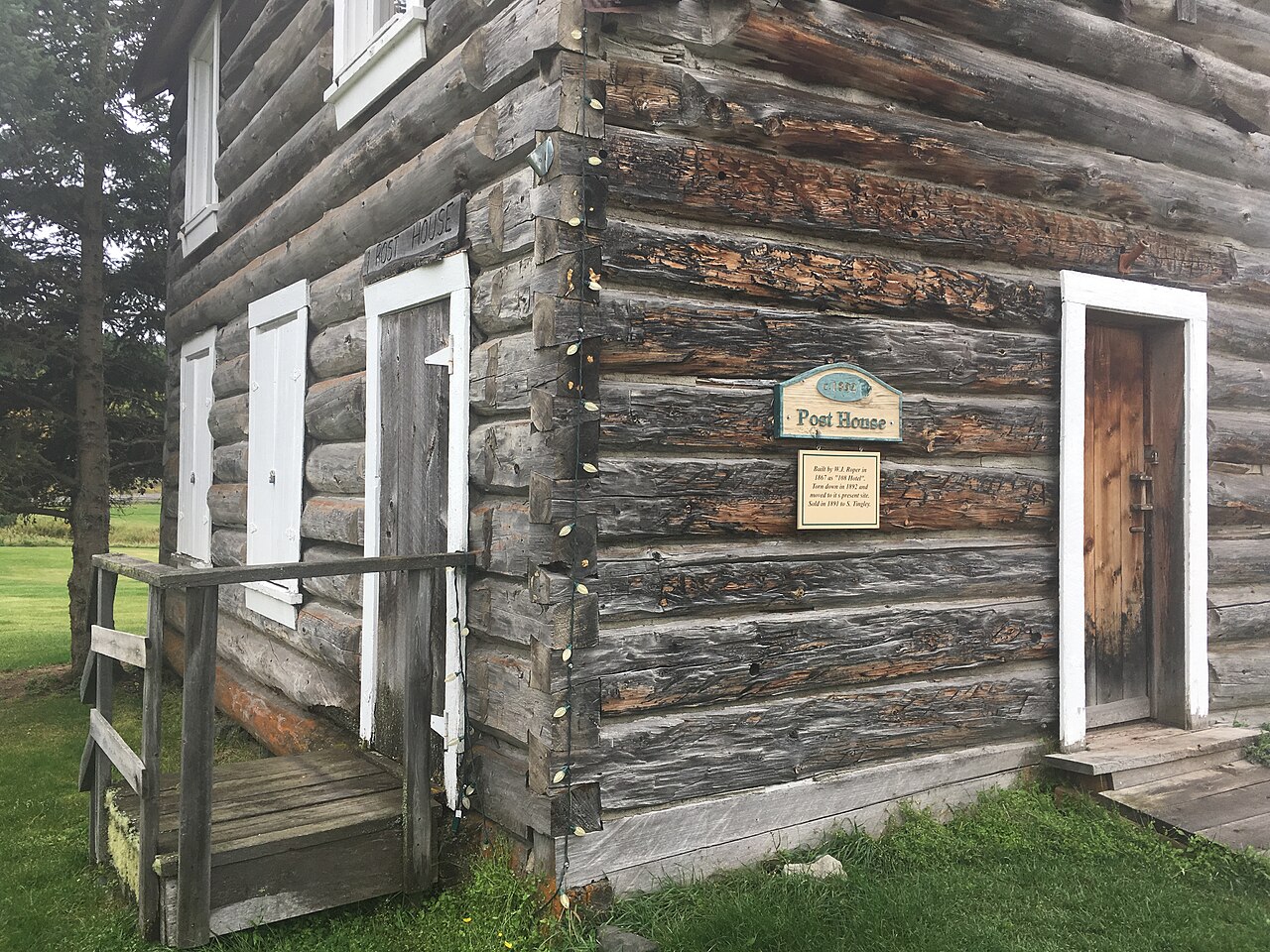
At 108 Mile Ranch Heritage Site, a real timber building sits beside an extraordinary claim. The Post House was built in 1892 using material from an older roadhouse across the highway, according to the heritage society. The murder-hotel legend attached to the place tells of Agnes McVee, travellers robbed of their gold and people who never continued their journeys.
The society introduces its long crime narrative as rumour. That is the essential starting point. A building can survive, a story can become famous, and the alleged events can still lack corroboration. Seeing one with your own eyes does not establish the other.
Sources: 1
The roadhouse beneath the legend
The site’s chronology places construction of the earlier log 108 Roadhouse in 1867 and its dismantling and reuse in the Post House in 1892. Stephen Tingley had purchased the property, and his son Clarence ran it. The chronology describes Clarence’s work as telegraph operator, hotel keeper, storekeeper, farmer and agent for the express company.
Those overlapping jobs suggest a stopping place woven into the region’s transport and communications. The road needed more than a bed for the night. People, horses, goods and information all required somewhere to stop. The surviving timbers connect the site to that practical history, regardless of what anyone believes about Agnes.
Sources: 2
A pamphlet sends a writer searching
Cartoonist Sarah Leavitt encountered the story while visiting 108 Mile. As she explained to Vancouver Magazine in 2019, a heritage pamphlet described a woman supposedly responsible for dozens of murders. Leavitt initially expected to fictionalize a real person.
The search changed the project. By the time her graphic novel was ready, she considered the legend probably untrue. She pointed to the absence of the sort of archival and court material that such a case should have left. Her suspicion about how the legend began was an interpretation, not a discovered confession by its inventor.
Sources: 3
The missing paper trail
In a first-person interview with Read Alberta, Leavitt described the problem more specifically. The story claimed an arrest, a sentence and an execution connected with Agnes and an accomplice. Yet she had not found records corroborating those events, despite the existence of courts, newspapers and people who wrote letters.
She also investigated a purported photograph labelled as coming from the BC Archives. She reported that the archive had no corresponding photograph under Agnes’s name or its variant spellings. The problem was not merely that one date was uncertain. The people and proceedings at the centre of the narrative were proving elusive.
Sources: 4
What fiction can do with the gap
Leavitt eventually published Agnes, Murderess as a graphic novel. Her own book page describes it as inspired by a legend. That distinction gives the work room to imagine a life without presenting its invented scenes as recovered testimony.
By then, Agnes had acquired a new life on the page. The elusive subject of an archival search became a fully imagined character, with an interior world that a pamphlet could only hint at. The novel belongs to the legend’s afterlife, another way the story travelled beyond the place that first made it memorable.
Sources: 5
Visit the place, keep the question open
108 Mile is a South Cariboo destination, farther from Prince George than the local walks in this collection. The heritage site’s October 2026 notice says it is closed for the season and expects to return for the May long weekend in 2027. Check its current information before planning access to the buildings.
The Post House deserves a careful caption: a later building made with earlier roadhouse timbers. Agnes deserves a careful introduction too: a legendary figure whose alleged crimes have not been substantiated. Neither qualification makes the place dull. It leaves the most interesting question intact: how did this particular woman become the story people remembered?
Sources: 6
Sources and further reading
- Post House (opens original source)108 Mile Ranch Heritage Site · Checked
- History (opens original source)108 Mile Ranch Heritage Site · Checked
- A (Sort of) True Crime Comic Launches in Vancouver this Week (opens original source)Vancouver Magazine, Alyssa Hirose, 19 September 2019 · Checked
- An Interview with Sarah Leavitt (opens original source)Read Alberta / Book Publishers Association of Alberta · Checked
- Agnes, Murderess (opens original source)Sarah Leavitt · Checked
- 108 Mile Ranch Heritage Site (opens original source)108 Mile Ranch Heritage Site · Checked