Barkerville to Richfield: A Walk Through the Cariboo Gold Rush
Follow Williams Creek from a surviving gold-rush town to the courthouse that outlasted its neighbours.
The town, then the building that stands alone
Barkerville gives you a whole streetscape to explore. Richfield asks you to pay attention to a single building. About two kilometres south of Barkerville, a wooden courthouse stands in a narrow, wooded valley beside Williams Creek. Its neighbours have largely disappeared. The contrast is the reason to make the walk: in one place, the gold rush fills a street; in the other, you can see how much a town can leave behind without remaining a town.
The courthouse was built in 1882, on the site of an earlier court building. Its pitched roof answered to Cariboo snow, while the rooms inside accommodated judges, juries and the business of colonial courts. This was an investment in permanence in a place whose prosperity depended on a resource people were digging out of the ground.
Sources: 1
Richfield came before the famous strike
Before Billy Barker gave his name to Barkerville, Richfield was already taking shape around gold discoveries on Williams Creek. Barker tried his luck there before moving farther down the creek. On August 17, 1862, his crew reached a rich deposit 52 feet below the surface. The town that grew around that strike became the better-known name.
That sequence gives the walk a pleasing reversal. Leaving Barkerville for Richfield means moving toward an earlier chapter of the rush, even though the courthouse you reach dates from two decades after Barker’s discovery. The landscape carries several times at once: the beginning of a mining camp, its later institutions, and the much quieter place that survived.
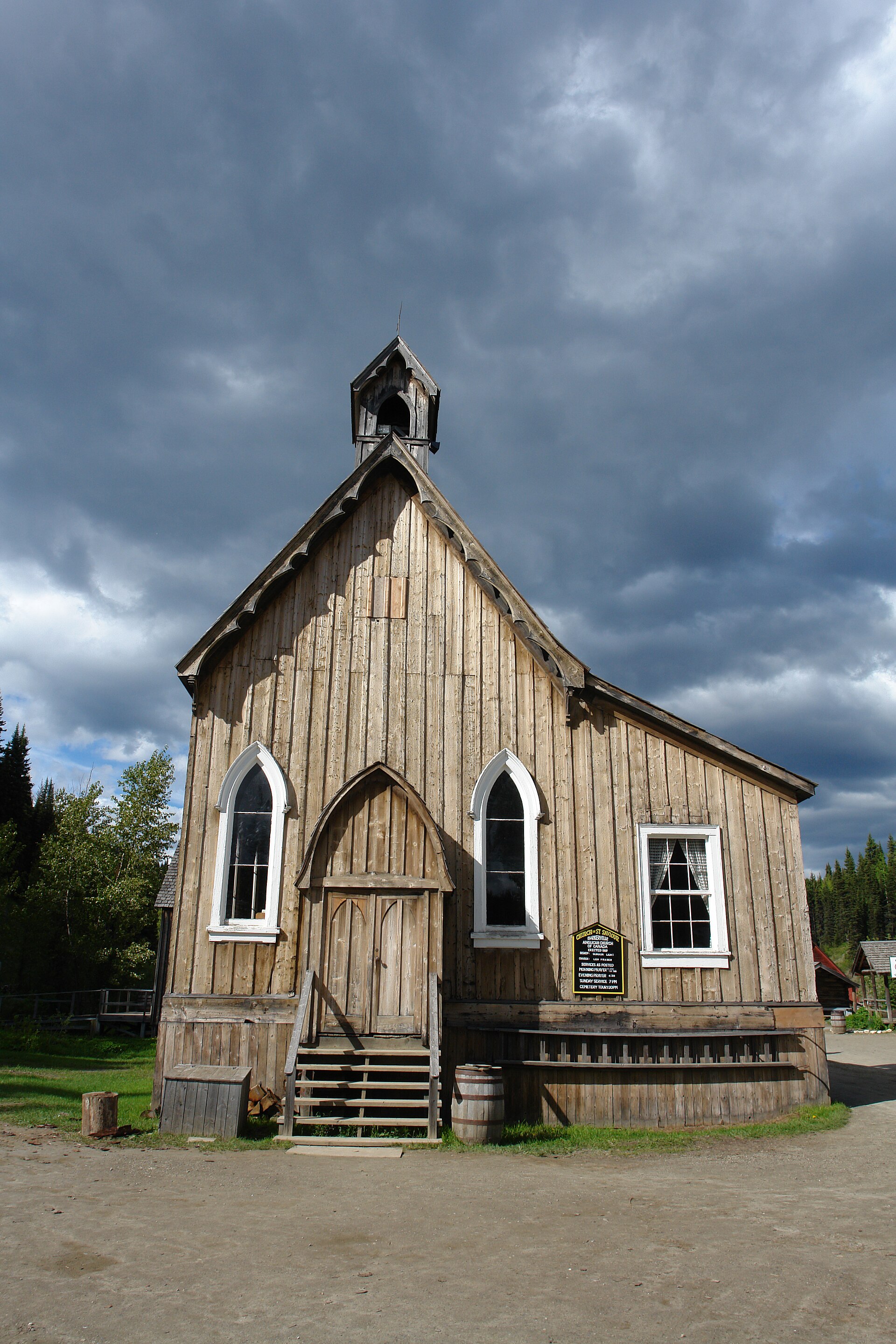
Look for the work of making a community
Back in Barkerville, the Chee Kung Tong building offers another way into the story. Built between 1874 and 1877, it combined a hostel, kitchen and social space downstairs with a society hall and altar room above. The organization helped newcomers and people wintering in the Cariboo find accommodation and a community, while also taking part in members’ business and political lives.
It is a useful building to keep in mind alongside the courthouse. Gold brought people here, but staying required meals, shelter, relationships and ways of settling disputes. Those ordinary needs are visible in the arrangement of rooms. They make the town more interesting than a story about a lucky strike alone.
Barkerville itself was rebuilt after the fire of 1868. Its surviving streets and buildings therefore tell a story of rebuilding as well as arrival. Neither the fire nor the changing fortunes of mining ended people’s efforts to make a life along the creek.
Leave room for more than one story
The historic site stands on the traditional, ancestral and unceded territories of the Lhtako Dene Nation and Secwépemc peoples. The gold-rush timeline begins long after the human history of this country. Barkerville’s interpretation now includes Indigenous connections to the region as well as the lives of Chinese miners and merchants, women, workers and the figures remembered in familiar place names.
In the operating season, look for the guided Richfield walk and court session, and give Chinatown its own share of the day. Programming changes, so check the current schedule before building a visit around a performance. The walk can be a thread through the day rather than the whole day: a courthouse in the trees at one end, a hostel and meeting hall at the other, and a creek that explains why both were built here.
Sources and further reading
- Richfield Courthouse (opens original source)Barkerville Historic Town & Park / BC Heritage Branch · Checked
- Our Story (opens original source)Barkerville Historic Town & Park · Checked
- Chee Kung Tong Building National Historic Site (opens original source)Canadian Register of Historic Places · Checked
- Barkerville Statement of Significance (opens original source)Canadian Register of Historic Places / BC Heritage Branch · Checked
- Main Season (opens original source)Barkerville Historic Town & Park · Checked