Winter Nights Near Prince George: Stars, Snow and the Chance of Northern Lights
Make a winter night near Prince George worth looking up for, with bright stars, realistic northern lights expectations and a practical way to choose a view.
Give the sky more than one chance to impress you
A winter night near Prince George does not need an aurora to be worth stepping outside. Build the evening around stars you can look for, with the northern lights as a possibility. That changes the experience of waiting: the sky already has something to offer.
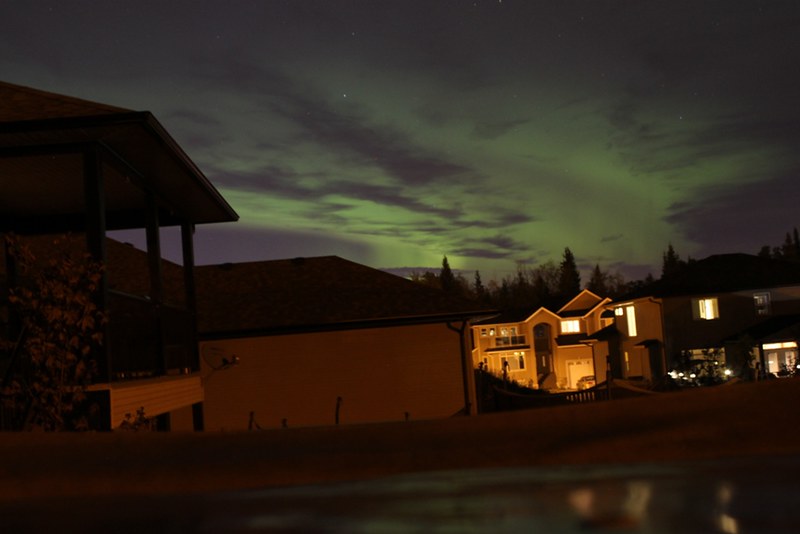
It also makes room for what an aurora may actually look like. NASA’s Night Sky Network notes that faint displays can appear less colourful and less structured to the eye than they do in photographs. A pale glow can be real, and a brilliant photograph can still be an honest record made by a camera with different capabilities from your eyes.
Sources: 1
Start with three stars in a row
Orion is one of the useful winter signposts. Find the three bright stars of its belt, then notice the larger arrangement around them: reddish Betelgeuse on one side and bright Rigel on the other. Below the belt, the sword includes the Orion Nebula, a much more subtle target than the bright outline of the constellation.
Once Orion feels familiar, look for the Winter Triangle formed by Betelgeuse, Sirius and Procyon. A current sky chart set to Prince George and the time of your outing will show where to look. You can learn a small part of the sky thoroughly without trying to identify everything at once.
Two forecasts, two different questions
For an aurora outing, check both ordinary weather and space weather. Cloud can hide a strong display; clear skies do not create one. NOAA’s short-term aurora product models where auroral activity is expected and how intense it may be, generally looking 30 to 90 minutes ahead when the required upstream measurements are available.
Treat it as guidance to a changing phenomenon. NASA cautions that the widely shared Kp index is a rough measure of intensity rather than a reliable clock for the start of a display. A forecast should help you decide whether to look, not persuade you to ignore cloud, fatigue or a difficult winter drive.
What makes the light
Auroras form when energetic particles interact with gases high in the atmosphere. Oxygen and nitrogen release light in characteristic colours as that added energy is lost. The visible shapes reflect processes far above the snowy landscape where you are standing.
That scale is part of the appeal. The trees and road belong to an ordinary evening near home; the light connects the scene to Earth’s magnetic environment and activity on the Sun. You do not need to understand every part of space weather to appreciate the connection.
If you take photographs, describe them honestly. Record the place and date and note a long exposure when relevant. Colour recorded by a camera is not a promise that another person will see the same brightness on another night.
Choose a place to stand, not a distant pin
For an independent outing, find a legal place with clear sky views and straightforward winter access. Check permission and opening hours, stay off lake and river ice, and avoid pulling onto a snowy highway shoulder for a photograph. A modest view near the vehicle can be more useful than a remote destination with uncertain parking.
Dress for standing still. The layers that felt sufficient on a walk may not feel sufficient during a long look through binoculars. Keep the session flexible, protect spare batteries from cold and head back while the evening is still enjoyable.
The RASC Prince George Centre provides another route into the sky through its volunteer-run observatory and scheduled public events. Check its own current announcements and weather arrangements before going; the observatory is not presented here as a permanently open viewing lot.
Come home knowing one more thing
Choose a small aim for the night: find Orion, trace the triangle or recognise how a faint auroral band differs from cloud. If the northern lights develop into a strong display, enjoy the surprise. If they do not, the evening can still leave you with a piece of the sky you will recognise next time.
That familiarity is a good reason to keep looking up through winter. The nights offer enough time to begin learning the landscape above the landscape.
Explore the places in this story
West Lake Provincial Park
A daytime outing in the broader observatory area. Check park hours and winter access separately; this is not an after-dark access recommendation.
Sources and further reading
- Night Lights: Aurora, Noctilucent Clouds, and the Zodiacal Light (opens original source)NASA and Astronomical Society of the Pacific · Checked
- Orion Constellation (opens original source)NASA and Space Telescope Science Institute · Checked
- Connecting the Dots with Asterisms (opens original source)NASA and Astronomical Society of the Pacific · Checked
- Aurora 30-Minute Forecast (opens original source)NOAA Space Weather Prediction Center · Checked
- NASA’s Guide to Finding and Photographing Auroras (opens original source)NASA · Checked
- Winter Stargazing Tips: Stay Warm and Cozy (opens original source)NASA and Astronomical Society of the Pacific · Checked
- RASC Prince George Centre (opens original source)Royal Astronomical Society of Canada, Prince George Centre · Checked