Winter Swans at Fraser Lake: A Different Reason to Head West
Fraser Lake’s winter swans offer a quieter northern BC outing, shaped by open water, feeding places and conditions that change through the season.
Follow the open water
A winter visit to Fraser Lake can turn on a patch of open water. As ice spreads, the places where swans feed and rest become concentrated, or shift elsewhere.
The area’s recognition as an Important Bird Area reflects its importance to wintering Trumpeter Swans. Finding them means paying attention to water that has remained open and accessible for feeding. Their gathering places change with the winter.
Sources: 1
Why these waters matter
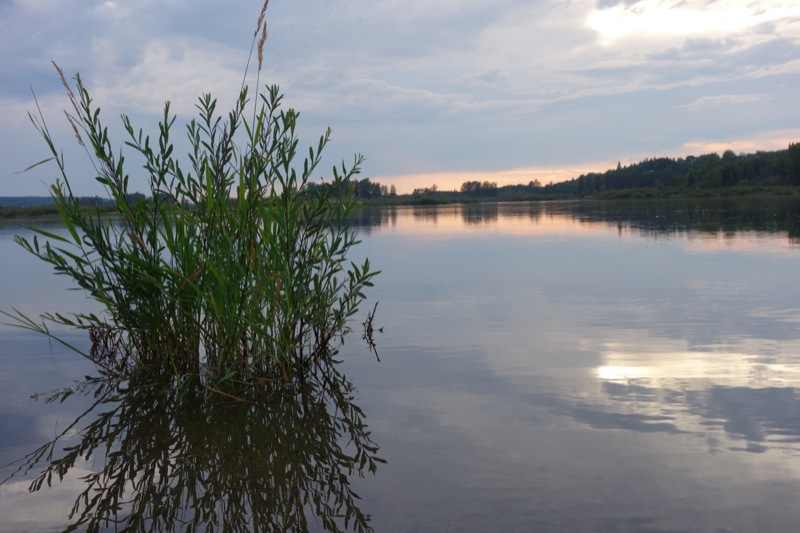
The Stellako River enters Fraser Lake at the west; the Nautley carries water out towards the Nechako at the east. The IBA account describes swans using open water around those connections as the lake freezes.
Historic surveys, including work in the 1990s, recorded large November gatherings. Later in winter, the number and distribution of birds can be quite different as the available water changes.
Sources: 1
A swan’s meal takes work
Trumpeter Swans feed mainly on plants. In shallow water they can stretch their long necks below the surface, tip forward or use their feet to disturb the bottom and loosen roots. Wintering birds may also use terrestrial food sources where those are available.
That makes a quiet bird with its head underwater worth watching. Feeding is an active part of getting through winter, even when the scene looks peaceful from the bank. Open water alone is not the whole requirement; food must also be accessible. A patch that suits a swan one week may become less useful as ice, water level or feeding conditions change.
Sources: 2
Look at the bill, then listen
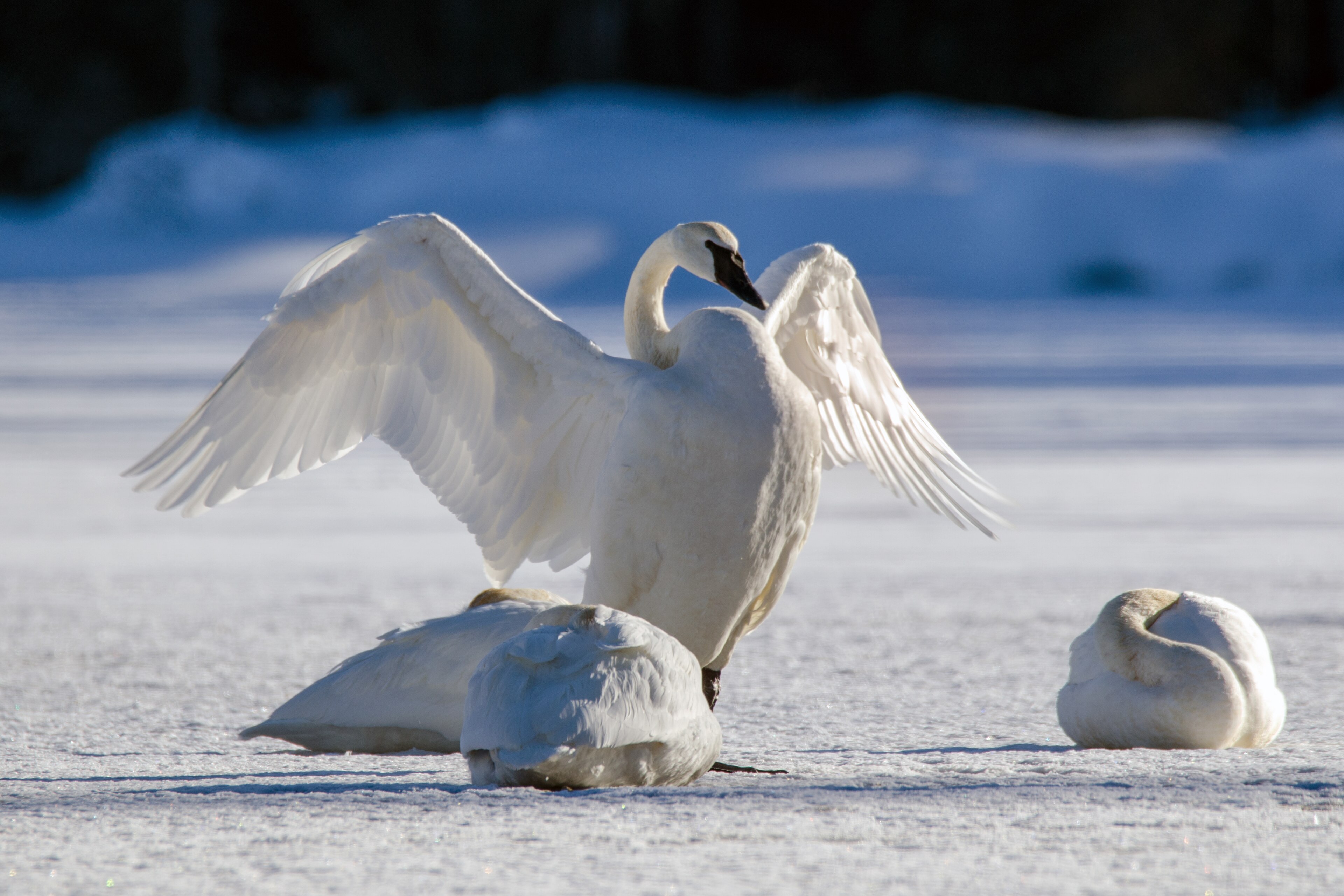
Adult Trumpeter Swans are white with black bills, while young birds retain greyer plumage. A rusty tint on the head can result from feeding in iron-rich settings. The name comes from the resonant quality of their calls.
Tundra Swans can be confusing at a distance. They often have a yellow patch near the eye, but its absence is not enough on its own to prove a bird is a Trumpeter. Shape, scale, bill pattern and voice work together. It is better to record a distant swan without a species name than to let a confident caption outrun the photograph.
Sources: 3
A warm winter changes the search
A Prince George Naturalists Club report from January 2015 offers a useful lesson. Its regional swan count noted that a warm winter had left more river water open, so birds were less concentrated at the usual locations. That report is a dated observation, not a forecast for this season.
It illustrates why fewer swans at a familiar stop do not necessarily mean the birds have vanished from the region. They may have more places to choose from. Winter birding is partly an exercise in reading conditions, and a disappointing stop can still teach you something about the landscape.
Sources: 4
Leave the meal undisturbed
The Village of Fraser Lake identifies the Nautley River area as a place to observe swans in winter and early spring. Confirm a safe public viewing place and lawful parking before travelling. Watch from shore with binoculars, and never approach across lake or river ice.
Once you find a suitable view, let the birds keep feeding. A swan tipping into the water, reaching for plants and returning upright is doing the work that carries it through the season. The quiet meal is the reason that patch of open water matters.
Sources and further reading
- Fraser Lake Important Bird Area, BC221 (opens original source)Birds Canada / Nature Canada, Important Bird Areas programme · Checked
- Trumpeter Swan Life History (opens original source)Cornell Lab of Ornithology · Checked
- Trumpeter Swan (opens original source)Hinterland Who’s Who · Checked
- Naturalists Club Events and Notes, 1 February 2015 (opens original source)Prince George Naturalists Club · Checked
- Points of Interest: Nadleh River (opens original source)Village of Fraser Lake · Checked
- Code of Birding Ethics (opens original source)Birds Canada / American Birding Association · Checked