Bats After Sunset: The Real Lives Behind Halloween's Favourite Animal
The silhouette is familiar. The animal inside it is a flying mammal, an acoustic hunter and a specialist in surviving the lean months.
A silhouette with an appetite
The Halloween bat is all outline: pointed ears, scalloped wings and a patch of black against the moon. The real animal has a much more demanding evening ahead. It has to find and catch small prey and earn back the energy spent hunting.
In British Columbia, bats eat insects. The creature associated with imaginary vampires is part of the living system that consumes moths, beetles and other small prey. Its most remarkable qualities are already present before anyone adds a costume.
Sources: 1
A hand that learned to fly
A bat's wing is an astonishingly altered hand. Long finger bones support a thin membrane, with joints that allow its shape to change through flight. The result is a flexible surface, rather than the rigid outline suggested by a paper decoration.
Bats are the only mammals capable of sustained powered flight. A flying squirrel glides; a bat supplies the wingbeats. That distinction matters when dinner is moving in three dimensions. The National Park Service's flight footage shows the problem vividly: a bat can twist and turn after a moth, while the moth may still evade it. A swoop that looks erratic from below can be one part of an encounter that is much more precise than we can follow.
Sources: 2
Sound that comes back carrying a shape
An insect-hunting bat sends out calls and listens to the returning echoes. Objects interrupt that outgoing sound and return information about the space ahead. Most of these calls are too high in frequency for human hearing, so the apparent silence above a pond can conceal an active exchange of sound.
As a bat closes on prey, its calls can accelerate into a feeding buzz. Researchers use microphones and acoustic recordings to make this hidden activity available to human ears and eyes. A spectrogram turns changing sound frequencies into a visible trace. The tiny mark crossing a twilight sky is doing something a Halloween silhouette cannot show: repeatedly questioning the space in front of it.
Sources: 3
Not every meal is caught the same way
BC's bats do not all work the same patch of air. Some hunt above water or around vegetation. Others can glean prey from surfaces, taking insects from leaves or other places instead of relying entirely on an aerial chase. Bats are not blind, either. Echolocation is an additional way of reading their surroundings, not a substitute imposed by an absence of eyes.
A forest edge, a wetland and a rough old tree therefore represent different parts of a bat's world. From the ground, they may look like separate features on a walk. To an animal feeding and sheltering across them, their connection can be the important thing.
Sources: 4
Where the night shift sleeps
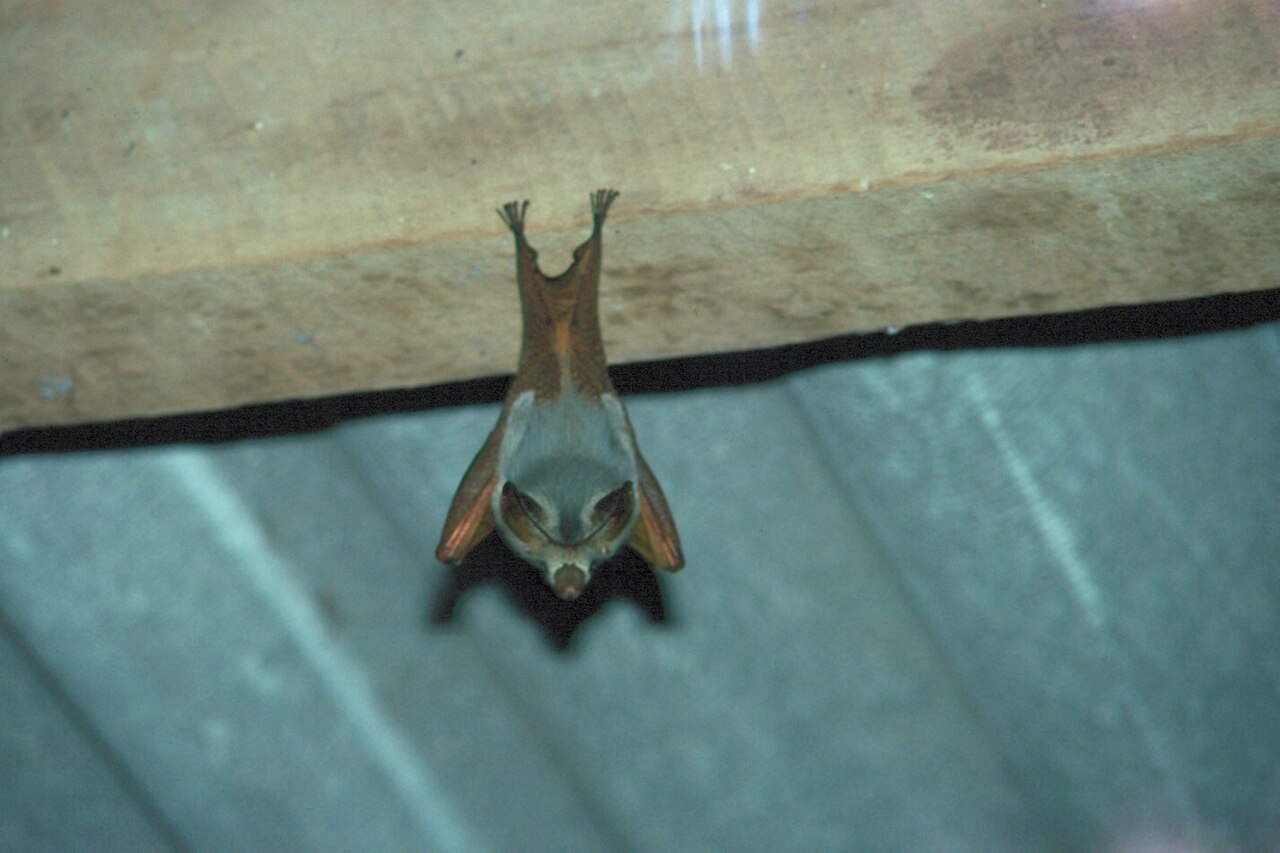
The familiar cave is only one possible address. Depending on the species and season, bats may roost in trees, rock crevices, buildings, bridges or other sheltered places. A roost used while raising young need not serve the same purpose as a winter refuge.
Some species gather in maternity colonies; others use different arrangements. These are living spaces, not exhibits to open for a better look. An apparently unremarkable crevice can be doing work that an exposed branch cannot: providing shelter during the hours when the bat is not feeding. The landscape's small hiding places matter as much as the open air.
Sources: 5
Halloween arrives near the hard part
Cold weather makes an insect-eating life difficult. Bats survive that seasonal shortage through migration, hibernation or a combination of the two, depending on the species. Hibernation reduces the energy cost of staying alive by lowering body temperature and slowing other functions.
It is not one uninterrupted sleep. Periods of torpor are broken by arousals, and the animal depends on stored reserves to make it through. That is why the bat on an October decoration should not become a promise of bats flying over every Prince George trail that evening. The calendar is approaching a different chapter of their lives, one shaped by the absence of abundant food.
Sources: 6
A better kind of fascination
Watch without touching or disturbing a roost. If a bat makes contact with a person, seek prompt medical advice; tiny bites can be difficult to notice. Admiration and sensible distance fit comfortably together.
The real bat needs no supernatural addition. It flies on a modified hand, hunts with returning sound and meets winter with strategies that make a small mammal's survival possible. Halloween gives it a shadow. Biology gives it a life.
Sources: 7
Sources and further reading
- Managing bats in buildings (opens original source)Province of British Columbia · Checked
- How Bats Fly (opens original source)US National Park Service · Checked
- Echolocation (opens original source)US National Park Service · Checked
- Bat basics and habitat (opens original source)BC Community Bat Program · Checked
- Where Bats Live (opens original source)US National Park Service · Checked
- Hibernate or Migrate (opens original source)US National Park Service · Checked
- Rabies (opens original source)BC Centre for Disease Control · Checked