The Faces in the Trees: The Artist Behind Cottonwood Island’s Carvings
Elmer Gunderson helped make the park’s paths. Years later, he gave walkers another reason to stop along them: faces, creatures and small surprises carved into the cottonwoods.
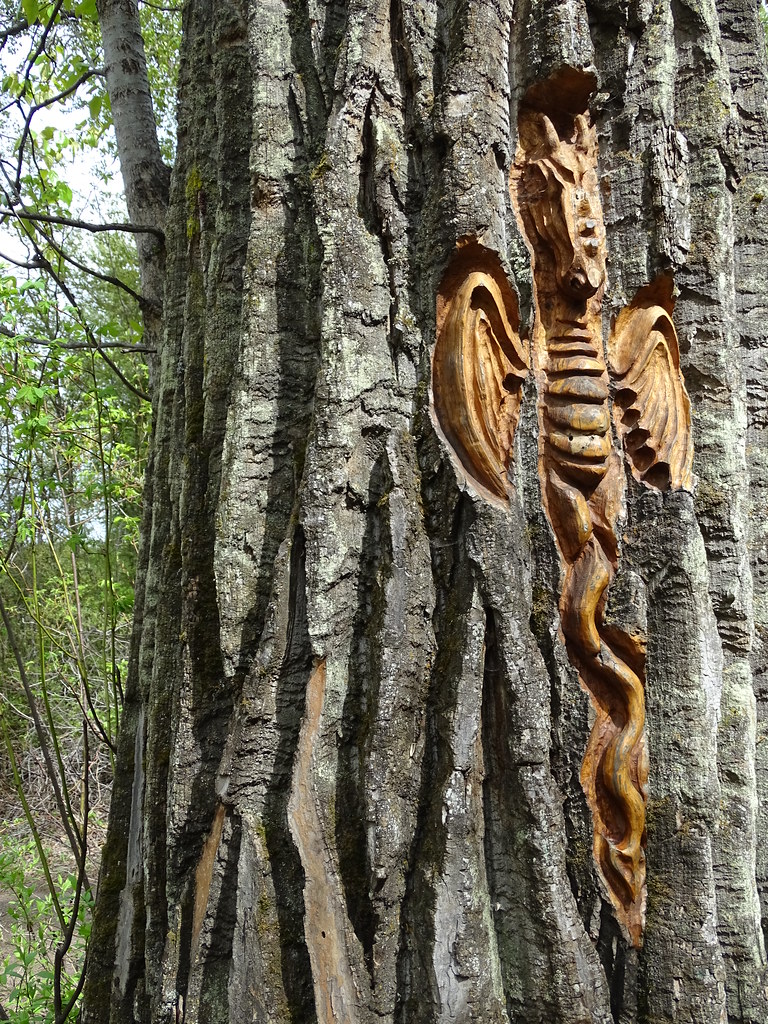
A face where you were expecting bark
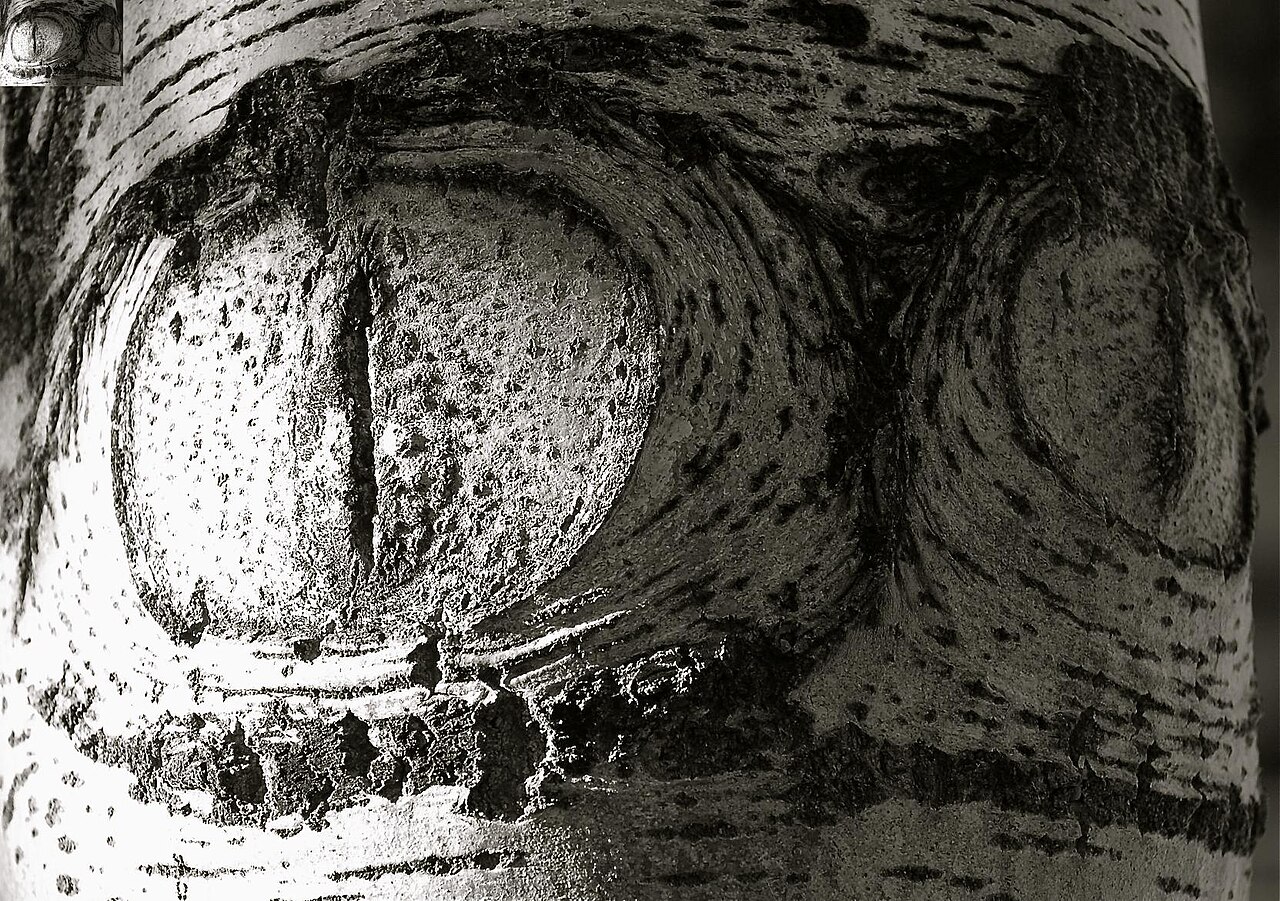
The first reward is the moment of recognition. A line in a tree becomes an eyebrow. A hollow becomes an eye. What looked like another textured trunk suddenly has an expression, and the walk changes. You start looking at the next tree differently.
At Cottonwood Island, those encounters have an artist behind them: Elmer Gunderson. His carvings put faces and creatures into the park’s cottonwoods without assembling them into a formal row. The pleasure is partly in their scale and partly in their placement. A work can feel like a private discovery even along a well-used public path.
There is an unusually close connection between the art and the place. Gunderson knew these paths before he began giving the trees faces. He had helped create the park itself.
First came the paths
During the 1980s, Gunderson worked on the park’s trail system as a City parks employee. The later carving project returned him to a landscape he had already helped people move through. In 2005, Prince George’s 90th anniversary committee sponsored eight carvings. Six more were added in 2016 with support from a Community Enhancement grant.
That sequence gives the sculptures a different character from an artwork delivered to a finished public space. The same person had a hand in the route and in what a visitor might notice beside it. Paths encourage movement; a small face in the bark interrupts it. Together they make a walk that rewards both.
The river has also taken part in the exhibition. Flooding damaged two of the original carvings. An outdoor gallery attached to trees cannot be frozen at its opening date, and a list of works from one year will never be a promise about every later visit.
Sources: 2
Look for the hand that made it
Gunderson works in wood and stone, and his interest extends beyond a recognisable face. Tourism Prince George’s artist profile describes his practice of leaving tool marks visible as a record of making. Rather than treating every trace of the knife as something to erase, he allows the process to remain part of the object.
That offers a rewarding way to look. After noticing an expression, study how it was made: the angle of a cut, the depth of a shadow, the place where a shaped surface meets rough bark. Take a step back as well. The relationship between carving and trunk can be as interesting as the detail close up.
Sources: 1
The dragon and the people who cared
In June 2019, a dragon carving was damaged by a vandal. CKPG interviewed Gunderson while he was working to repair it. He spoke about how much the community’s support mattered, and how far interest in the sculptures had grown since the first project in 2005.
It is a small incident with a revealing aftermath. People had become attached to a creature in a tree. A thing encountered on an everyday walk had acquired enough meaning that damage to it felt personal, and encouragement returned to the person who had made it.
The episode also brings the artist back into a landscape where his work can seem almost anonymous. These pieces were imagined, cut, revised and cared for. Enjoying them includes leaving the bark and surrounding ground undisturbed, so another walker can have the same moment of discovery.
Sources: 3
A walk with room for surprises
The carvings are part of a living park, and their surprise depends on that setting. A shaped face shares its surface with ordinary bark; nearby branches and the river remain part of the encounter. The City continues to identify Gunderson’s work among Cottonwood Island’s features.
Over time, a particular face can become as familiar as a bridge or a bend in the trail. Gunderson helped make the paths, then gave people reasons to pause beside them. That is a distinctive kind of public art: work that becomes part of the way a city knows one of its everyday places.
Sources: 4
Explore the places in this story
Cottonwood Island Nature Park
Use established public paths to look for the carvings.
Sources and further reading
- Local Legends: Elmer Gunderson (opens original source)Tourism Prince George · Checked
- Cottonwood Island Tree Bark Carvings (opens original source)Arts BC · Checked
- Local artist still feeling inspired after recent vandalism (opens original source)CKPG Today · Checked
- Cottonwood Island Nature Park (opens original source)City of Prince George · Checked