Quesnelle Forks: Empty Cabins Where Two Rivers Meet
Explore Quesnelle Forks through its riverside buildings, Chinese Canadian history and the community work that keeps this Cariboo townsite legible.
The cabins are only half the view
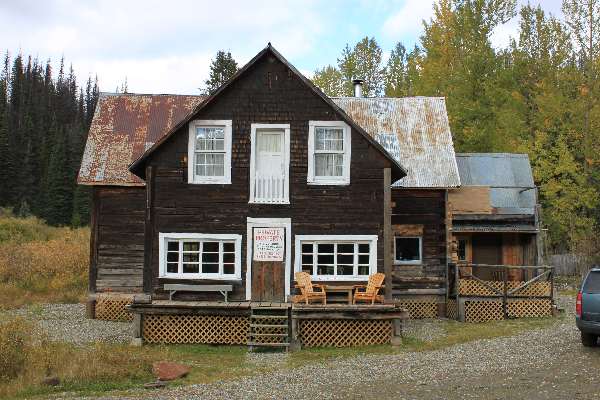
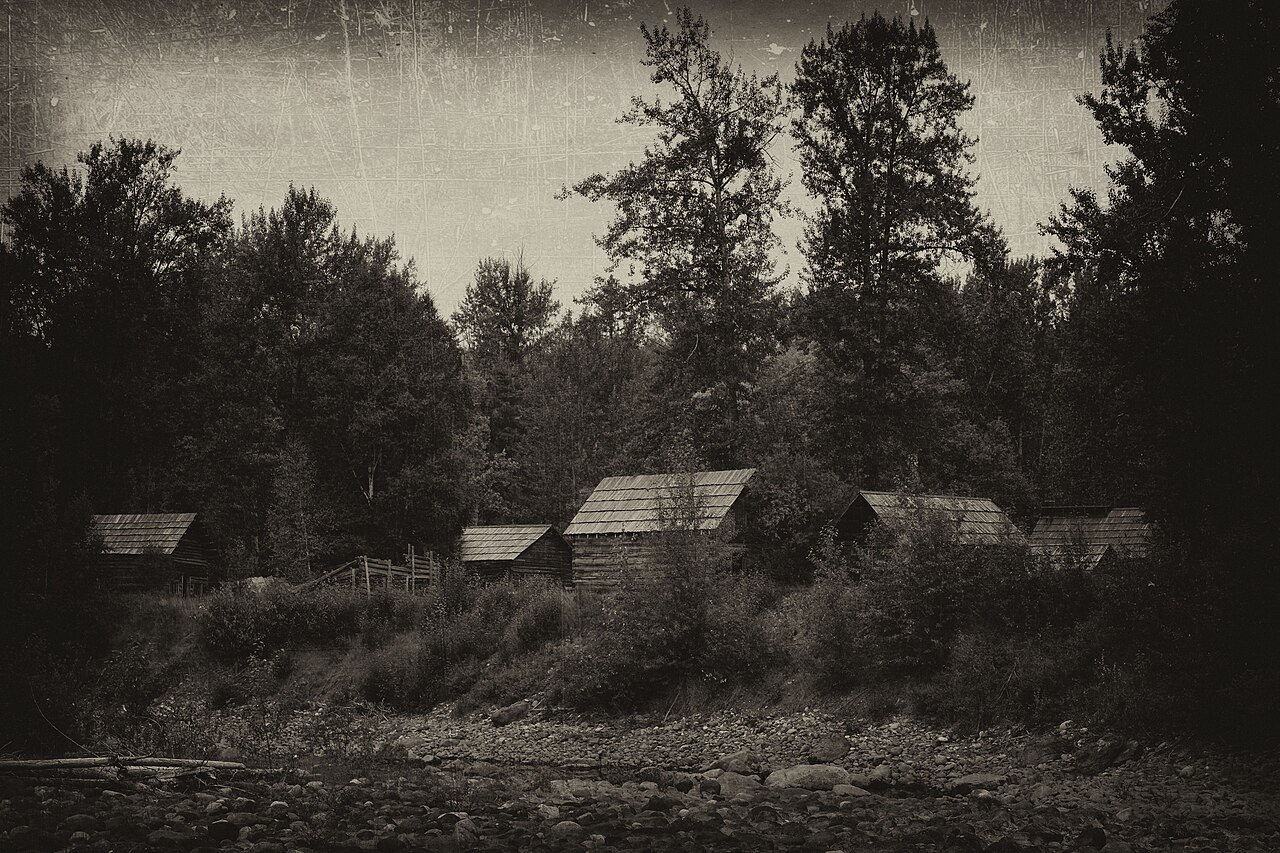
At Quesnelle Forks, look beyond the buildings to the rivers. The Quesnel and Cariboo meet beside the old townsite, giving the place its name and much of its logic. A settlement here could serve people moving into the goldfields. The surviving cabins are the most immediate evidence, but the meeting of the waterways helps explain why a town was built at all.
This is a farther Cariboo history trip, approached through the Likely area. It belongs to a different scale of journey from an afternoon walk inside Prince George. Give the place time, including time to notice how its buildings relate to the ground and water around them.
Sources: 1
A gateway before the road chose another way
The provincial heritage account dates the settlement to 1859 and records a Royal Engineers survey in 1861. Before Barkerville became dominant, the Forks supplied miners heading into the Cariboo. The completed Cariboo Wagon Road bypassed the settlement, changing its position in the movement of people and goods.
A road can alter a town without moving a single building. Customers and freight find another route; businesses must adjust to who still comes through. That is a more useful way to understand the empty spaces than imagining a community vanishing in one dramatic moment. The first rush passed, but life here continued.
Sources: 2
The people who remained
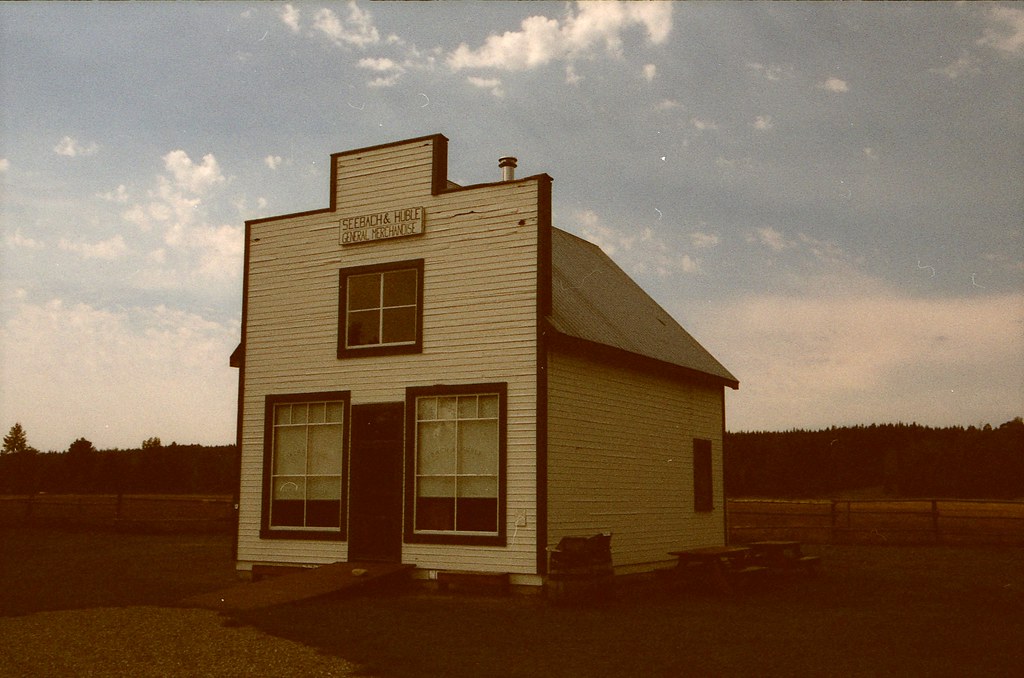
Chinese Canadian residents sustained a community of merchants, farmers, tradespeople, cooks and other workers long after the early boom. The Chee Kung Tong helped newcomers find work and supported cultural and funerary life. Its building makes the site a record of association and belonging, as well as mining.
This part of the story deserves more than an aside. The people who stayed were making homes and livelihoods in a changing regional economy. A building that looks silent to a visitor may represent years of organising, supplying neighbours and keeping connections across long distances. Its emptiness today does not make those years less substantial.
Sources: 2
A landscape with continuing responsibilities
The rivers did not acquire their significance when miners arrived. Xatśūll First Nation describes ongoing stewardship responsibilities and traditional values in the Quesnel and Cariboo river areas, alongside concerns about modern mining and other development. The historic townsite sits within a landscape whose relationships continue.
The former settlement sits among continuing responsibilities to land and water. Read its buildings as one layer of that longer history. The rivers are still carrying a much larger story past the cabins.
Sources: 3
Preservation is work, not a pause button
A 2011 Likely community newsletter describes cemetery care and local funding for maintenance at Quesnel Forks. Today the regional district identifies the Likely and District Chamber of Commerce as the site’s ongoing manager. The town has not simply waited unchanged for visitors to discover it. People have chosen to keep it visible.
The district describes roughly 860 m of gentle, packed-gravel trails through the historic setting. That gives a visit a manageable framework, though current surface conditions and facilities should be checked if accessibility is essential. Follow the established route and the site’s interpretation rather than treating every doorway as an invitation to enter.
Leave room for the rivers
Confirm the access road and site status before setting out, especially late in the season. The longer back-road connection towards Barkerville is a separate seasonal journey; a map showing a circle route does not make it an October driving recommendation.
At the Forks, resist turning the visit into a count of cabins. Read a name, compare a building’s size with its purpose, and finish with the river setting that brought journeys together. The place is memorable because it lets small surviving structures carry a much larger history. What returns to mind afterwards may be a doorway, but the story behind it reaches far beyond the room.
Sources and further reading
- Gold Rush Circle Route (opens original source)Gold Rush Trail, Cariboo Chilcotin Coast Tourism · Checked
- Quesnel Forks: Statement of Significance (opens original source)Province of British Columbia, Heritage Branch · Checked
- Natural Resources (opens original source)Xatśūll First Nation · Checked
- Likely Matters, May 2011 (opens original source)Likely community newsletter, hosted by UNBC Quesnel River Research Centre · Checked
- Quesnelle Forks Low Mobility Trail (opens original source)Cariboo Regional District · Checked