Who Was Here Before You? Reading Animal Tracks in the Snow
A few prints across a snowy path can turn an ordinary walk into a story about movement, food and the neighbours you rarely see.
A crossing you almost missed
A line of small depressions crosses the walking path and disappears between the trees. There is no animal in sight, only the evidence of a journey that happened before yours. The prints can make an otherwise ordinary patch of snow the most interesting part of the outing.
Begin with what is visible. Are there distinct toes, a pad or a divided hoof? Do the marks repeat in pairs or groups? Is the trail narrow and direct, or does it wander? Learning the shapes and the movement together offers a better beginning than choosing a species from one blurry hole. The snow has preserved a fragment of behaviour as well as a footprint.
Sources: 1
The large feet can be out in front
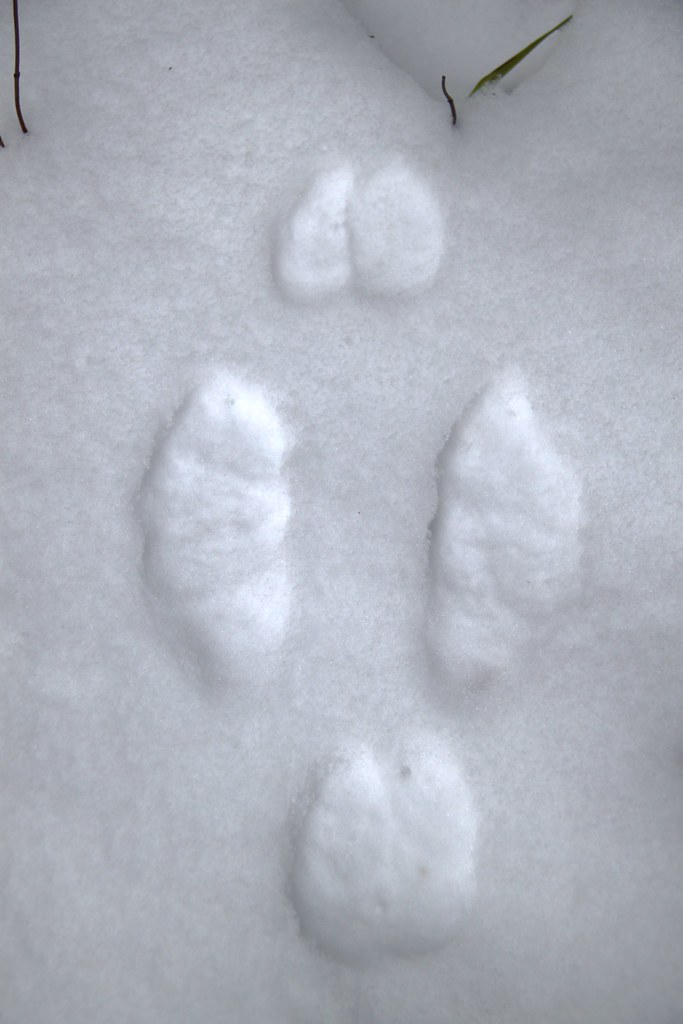
Snowshoe hare tracks offer one of winter’s most memorable puzzles. In a typical bounding pattern, the large hind feet land ahead of the smaller front feet. Read the marks as a static picture of the animal standing still and it is easy to send the imaginary hare in the wrong direction.
The pattern changes with movement. An animal stretching into a faster gait can leave a different arrangement from one travelling more slowly. The same foot can also make different impressions in different material. Alaska’s wildlife educators illustrate this with hare tracks in silt: a partial impression can look much shorter than the print made in snow.
A track is the meeting of an animal, a movement and a surface.
Sources: 2
Snow edits the evidence
Fresh-looking edges do not always mean the animal passed a few minutes ago. During cold, calm weather with little sun, a print can remain sharp for days. Wind and melting can alter a much newer track quickly. Weather is part of the clock.
A snowfall gives a useful boundary: prints crossing its undisturbed surface were made after that layer fell. Beyond that, certainty is harder. Crumbs kicked out of a footstep can bond to nearby snow, while the edges of a depression soften or become rounded. The changes depend on conditions.
This is why an oversized hole deserves a second look before it becomes a story about an enormous animal. The print may have changed substantially since the foot left it.
Sources: 3
Read a sentence, not a single letter
A useful record includes more than the clearest print. Photograph it from above with a ruler alongside, then include several steps and a wider view of the setting. The repeated pattern can show how the animal moved, and the surrounding habitat supplies context that a tight close-up removes.
Low light from the side can reveal shallow edges that disappear under flat illumination. A small light can help, although there is no need to disturb the snow to improve the picture. Record the date and the recent weather too.
These simple observations make the eventual identification more satisfying. A specialist or a good field reference has far more to work with than a photograph of one unscaled dent.
Sources: 4
The trail includes more than feet
Feeding signs add another line to the story. Cone scales and stripped cores can point towards a squirrel’s work; neatly clipped stems can be among the signs of hare browsing. Look for supporting evidence before deciding.
A snow trail ending at a tree invites a closer look from the path. A food cache or disturbed bark may turn a nameless set of marks into a question worth taking home.
Sources: 5
Let the animal keep its distance
Understanding a track does not require catching up with its maker. If the marks leave the public trail, disappear into dense cover or lead towards water, the walk can continue without following them. Keep dogs from pursuing the trail too, and never use food or calls to bring an animal into view.
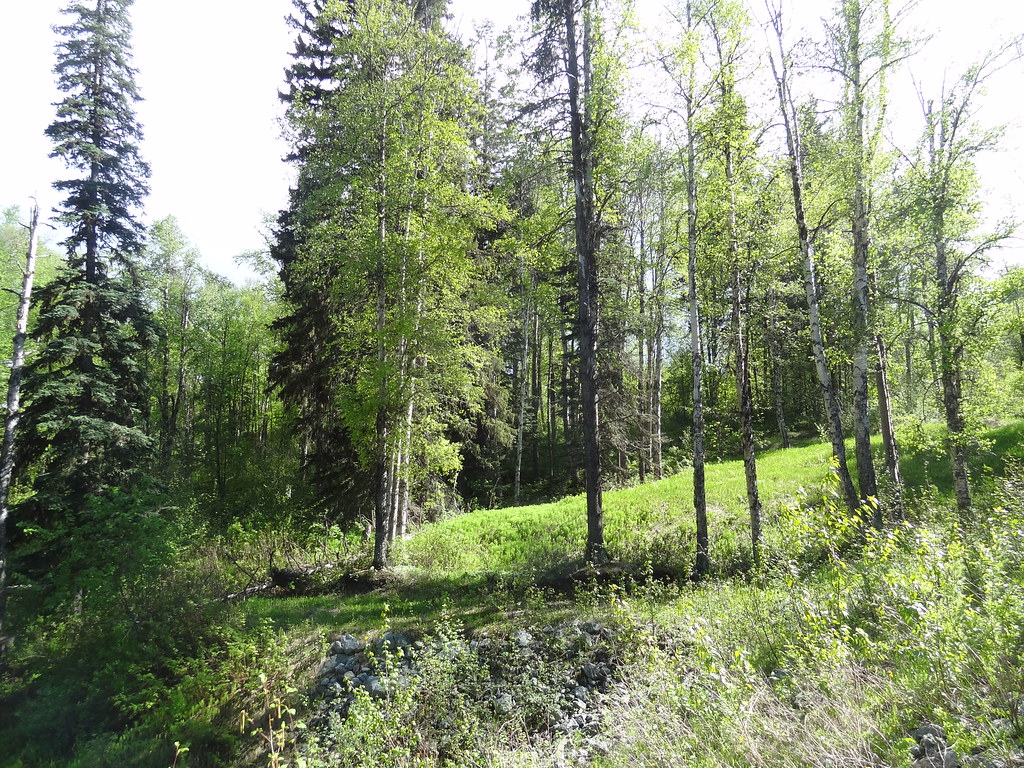
The pleasure is in discovering how much activity a place holds when you are absent. The woods around Forests for the World or Ferguson Lake can offer a different experience when the object of attention is a crossing, a pause or a feeding place, rather than a distant destination.
Sometimes the most accurate answer remains uncertain. Even then, something passed this way. For a moment, your route and its route meet.
Sources: 6
Explore the places in this story
Forests for the World
Look for signs beside established paths; species and fresh tracks are not guaranteed.
Ferguson Lake Nature Reserve
Use the land trail and current access guidance. Never follow tracks onto lake ice.
Sources and further reading
- Tracks of Alaska Animals: A Guide for Educators (opens original source)Alaska Department of Fish and Game · Checked
- Tracks of Alaska Animals: A New Guide for Educators (opens original source)Alaska Department of Fish and Game, November 2025 · Checked
- Impressions in the Snow (opens original source)Alaska Department of Fish and Game · Checked
- Tracking in Snow (opens original source)Alaska Department of Fish and Game · Checked
- Insect, Mammal and Bird Signs (opens original source)Alaska Department of Fish and Game · Checked
- 7 Ways to Safely Watch Wildlife (opens original source)US National Park Service · Checked