Tumbler Ridge: The Dinosaur Discovery That Started With Two Kids and a Creek
A summer outing on Flatbed Creek helped turn familiar bedrock into a scientific story that a whole community could take part in.
An ordinary day with an extraordinary aftermath
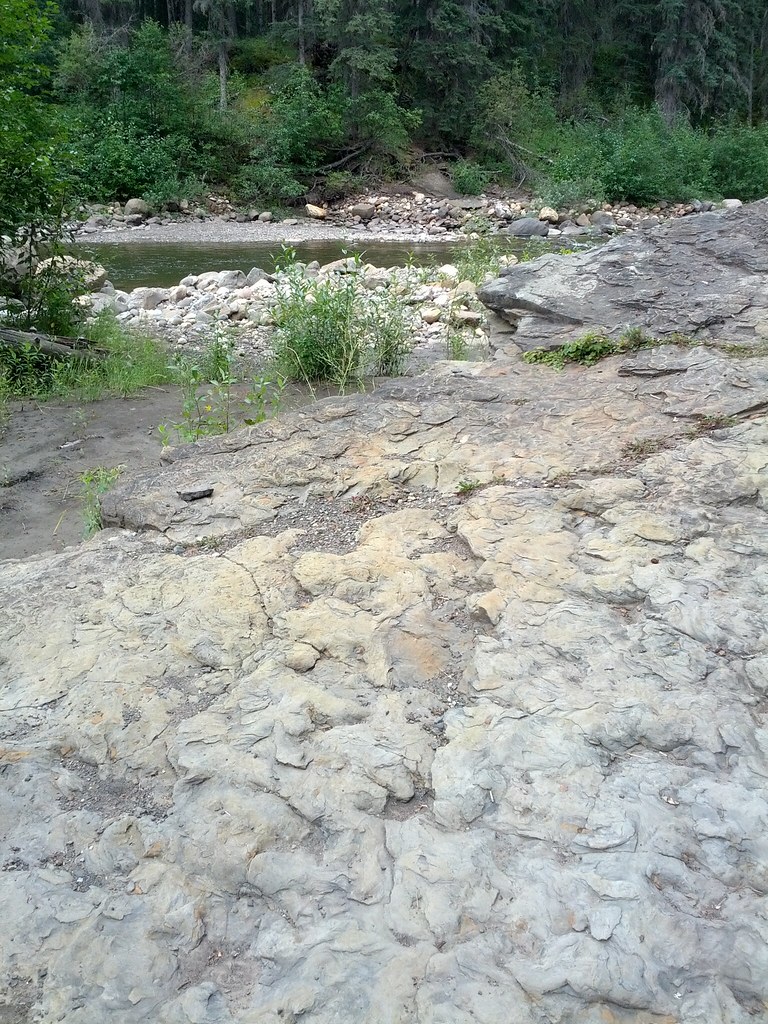
The story begins with two children out on a creek, not an expedition searching for fossils. In 2000, Mark Turner, aged 11, and Daniel Helm, aged eight, were tubing on Flatbed Creek near Tumbler Ridge. After coming off their tube, they walked upstream over exposed rock and noticed a pattern of depressions. They thought they were looking at dinosaur footprints.
According to the Tumbler Ridge Museum Foundation, convincing adults took persistence. Their discovery eventually reached palaeontologists Philip Currie and Rich McCrea. When McCrea visited in 2001, he confirmed the site's importance. A feature that might have looked like an odd patch of creek bed had become a scientific lead.
Sources: 1
A footprint is a different kind of fossil
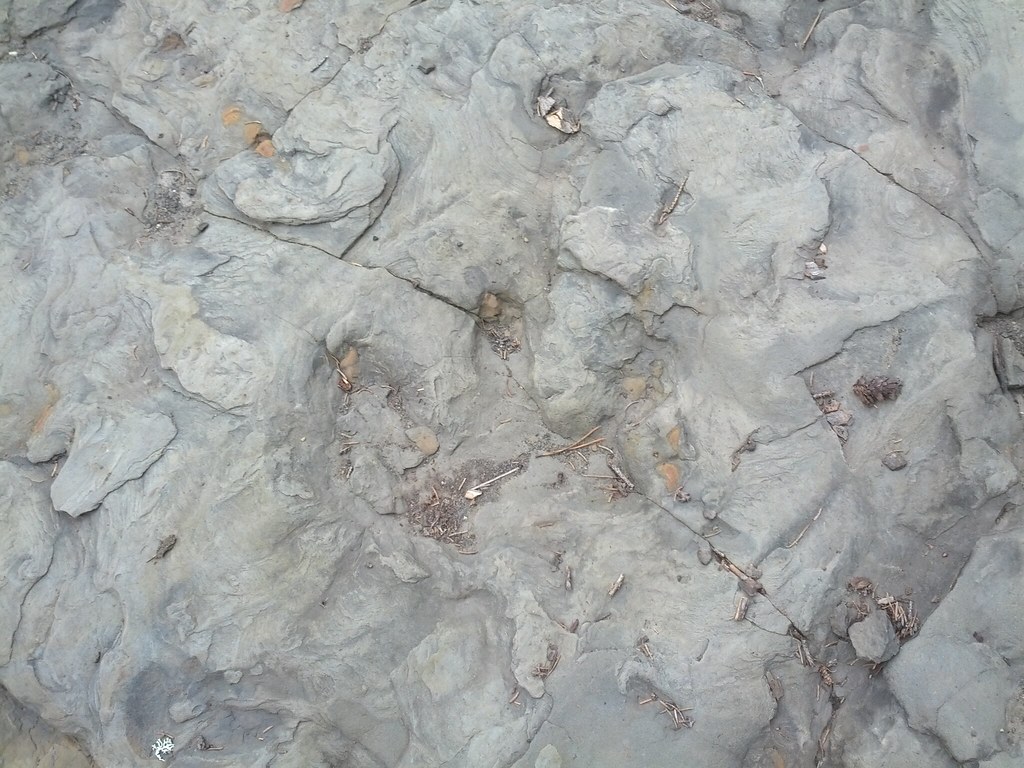
A dinosaur bone preserves part of an animal. A footprint preserves evidence of something it did while alive. Palaeontologists call that a trace fossil. Tracks can retain a record of movement across a surface that later became rock, giving researchers a different kind of evidence from a skeleton.
That distinction helps explain why the boys' observation mattered. Their find was a trackway, a sequence rather than one isolated shape. Its position in the rock also mattered. A fossil carries information about the layer in which it occurs and its relationship to other traces. Seeing it where it formed gives researchers context that a loose souvenir cannot preserve.
The discoveries kept coming
The geopark's palaeontology account describes the 2000 find as a catalyst for further discoveries across the region. Tracks and bones have since been documented in several Cretaceous rock formations. The broader record spans a long stretch of dinosaur history rather than a single moment or species.
This is one reason to resist imagining the whole area as one enormous dinosaur scene. Different rock layers record different times and environments. Tumbler Ridge's fossil collections also include marine life and plants. The story is richer when each find is allowed its own age and setting, rather than placing every specimen beside the same imaginary herd.
A community learned to look
The scientific work grew alongside an unusual amount of local effort. Volunteers helped develop displays, trails and tours, while the museum's research arm provided a place to prepare and study specimens. The eventual geopark brought those geological stories together with outdoor recreation and community life.
That connection is central to what a geopark is for. Geological heritage becomes a way to understand a place through its landscapes, people and history. Tumbler Ridge is listed by UNESCO as a Global Geopark today. Walking a trail here can therefore be both an outing and an introduction to research that began with someone paying attention to familiar ground.
Start with the gallery, then choose a walk
For a first visit, the Dinosaur Discovery Gallery gives the outdoor sites useful context. A rock surface becomes easier to read after seeing examples, learning what a trackway represents and hearing which details researchers use. Check the museum's current opening hours and tour offerings before setting the day in stone.
Where available, a guided trackway visit lets the landscape become the second half of the museum experience. A guide can explain which marks belong together and how they are read, while handling the practical question of where visitors may go. Flatbed Creek and the Wolverine Dinosaur Trail are separate outings, each with its own setting and access arrangements.
Leave the next discovery in place
The encouraging lesson is that careful observation can matter. It is not an invitation to chip a promising shape out of bedrock. If you notice a possible fossil, photograph it in place, record the location and pass the information to the appropriate experts. British Columbia's fossil reporting form specifically asks for location details and photographs that preserve the find's context.
The next time an unfamiliar pattern catches your eye, take the question seriously. Slow down, keep a record and ask someone who can help interpret it. Curiosity is a good thing to bring home from a walk.
Sources: 7
Explore the places in this story
Flatbed Creek dinosaur tracks
Check museum tour arrangements and current creek conditions.
Wolverine Dinosaur Trail
A different tracksite; do not imply it is the boys’ original discovery location.
Sources and further reading
- About the Tumbler Ridge Museum Foundation (opens original source)Tumbler Ridge Museum Foundation · Checked
- Find-A-Feature: Fossil (opens original source)US Geological Survey · Checked
- Geopark Palaeontology (opens original source)Tumbler Ridge UNESCO Global Geopark · Checked
- Dinosaur Discovery Gallery (opens original source)Tumbler Ridge Museum Foundation · Checked
- UNESCO Global Geoparks list (opens original source)UNESCO · Checked
- Tumbler Ridge Global Geopark (opens original source)Tumbler Ridge UNESCO Global Geopark · Checked
- Report a Fossil (opens original source)Province of British Columbia · Checked