That Scream in the Woods: The Unsettling Voices of Owls
Cackles, gurgles and piercing cries belong to the owl repertoire too. Listening carefully reveals much more than a familiar hoot.
A much stranger voice
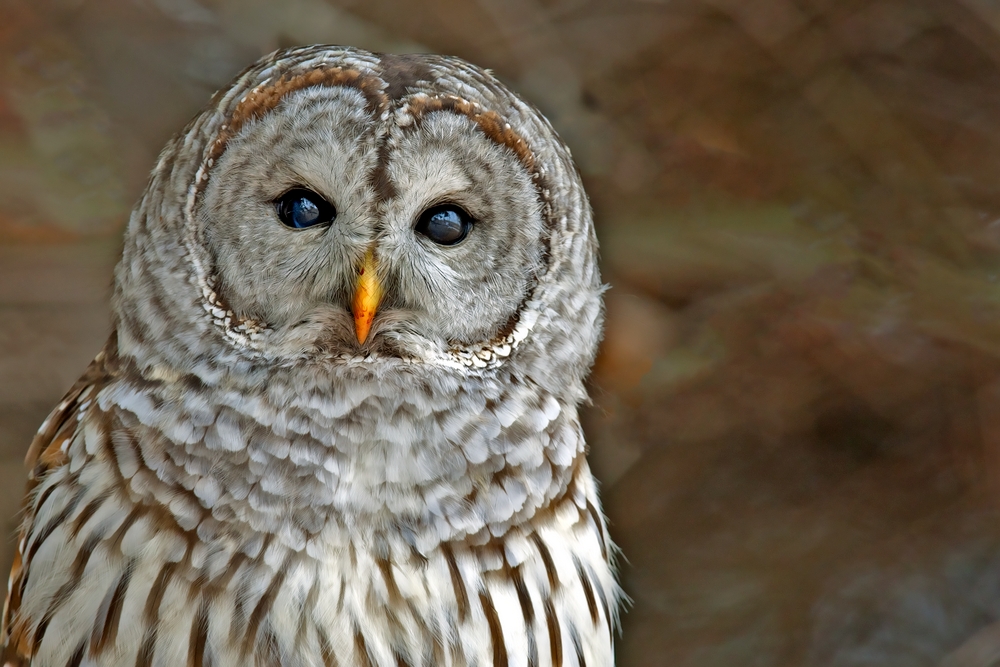
A Barred Owl duet can contain cackles, gurgles, hoots and sounds that resemble caws. Heard without a view of the birds, that mixture can be startling. The voice seems too varied to belong to the round-headed owl in a field guide.
Cornell’s sound collection makes the surprise easy to explore at home. Start with the measured hooting, then listen to a duet. The change is dramatic. Learning that both belong to the same species enlarges the possibilities the next time something unfamiliar calls from the woods around Prince George.
Sources: 1
Thirteen ways to speak
In a study published in 2010, researchers Karan Odom and Daniel Mennill distinguished 13 adult Barred Owl vocalizations, plus a nonvocal bill snap. Their analysis included recordings from wild and captive birds in Florida. Some calls occurred mainly outside duets; others were closely associated with the exchange between a pair.
The researchers used recordings and measurements to separate sound types that a casual listener might bundle together as a hoot or a scream. That is why a short description such as 'something shrieked' leaves so much unresolved. Rhythm, pitch and the way notes follow one another all add information.
The study’s Florida recording times are not a timetable for finding owls in northern BC. Its useful gift to a listener here is the richer vocabulary: one species can produce a remarkably varied set of sounds.
Sources: 2
The deep voice has a piercing side
Great Horned Owls are associated with low, soft hooting delivered in a broken rhythm. A pair may answer one another, with the female’s hoots higher than the male’s. But their repertoire also includes whistles, barks and shrieks.
Cornell describes piercing begging calls from young birds and screams associated with nest defence by adults. The same broad description of a sound can therefore hide different ages and situations. A begging youngster belongs to its own part of the breeding cycle, not to a guaranteed October soundtrack.
An unfamiliar cry does not identify an owl by itself. It is a starting point for a better listen.
Sources: 3
Listen to the forest around the voice
The BC Breeding Bird Atlas describes Barred Owls in coniferous and mixed forests, frequently near water, with nesting places in tree cavities or broken trunks. The species’ history in the province is surprisingly recent: the atlas traces the first BC record to the Liard River in 1943, followed by a southward expansion.
That gives a familiar forest bird a history of its own. It also encourages a wider view of habitat. A standing old trunk may matter for reasons that are invisible from a trail. The river, the trees and the spaces within those trees all belong in the story, even when the bird itself stays out of sight.
Sources: 4
Make a listening record
If a call repeats, note the time, whether it is a single sound or a series, and whether a second bird answers. A short recording made from where you already stand can preserve details that memory smooths away. Compare it later with documented recordings, including several examples rather than only the familiar call.
Keep the listening passive. Birds Canada’s ethics guidance asks observers to limit call playback and avoid stress around nests and roosts. There is no need to make the bird respond for the experience to count.
Sources: 5
Let the voice keep some distance
A good encounter does not require a torch beam to find the caller or a photograph to finish the story. Sometimes the useful discovery is simply that an owl can sound like that.
The woods hold more voices than the familiar hoot suggests. Recognising a cackle or a rising cry can make a strange sound less mysterious, while leaving its owner exactly where it belongs: somewhere among the trees, carrying on a conversation you have only partly understood.
Sources and further reading
- Barred Owl sounds (opens original source)Cornell Lab of Ornithology · Checked
- A Quantitative Description of the Vocalizations and Vocal Activity of the Barred Owl (opens original source)Karan J. Odom and Daniel J. Mennill, The Condor, 2010 · Checked
- Great Horned Owl sounds (opens original source)Cornell Lab of Ornithology · Checked
- Barred Owl: BC Breeding Bird Atlas (opens original source)Richard Cannings, Atlas of the Breeding Birds of British Columbia, 2015 · Checked
- Code of Birding Ethics (opens original source)Birds Canada · Checked