Ghost Pipes: The Pale Plants Hiding in Prince George's Forests
A record from Forests for the World leads into the hidden life of a flowering plant that gets its carbon through fungi.
The ghost that turns black
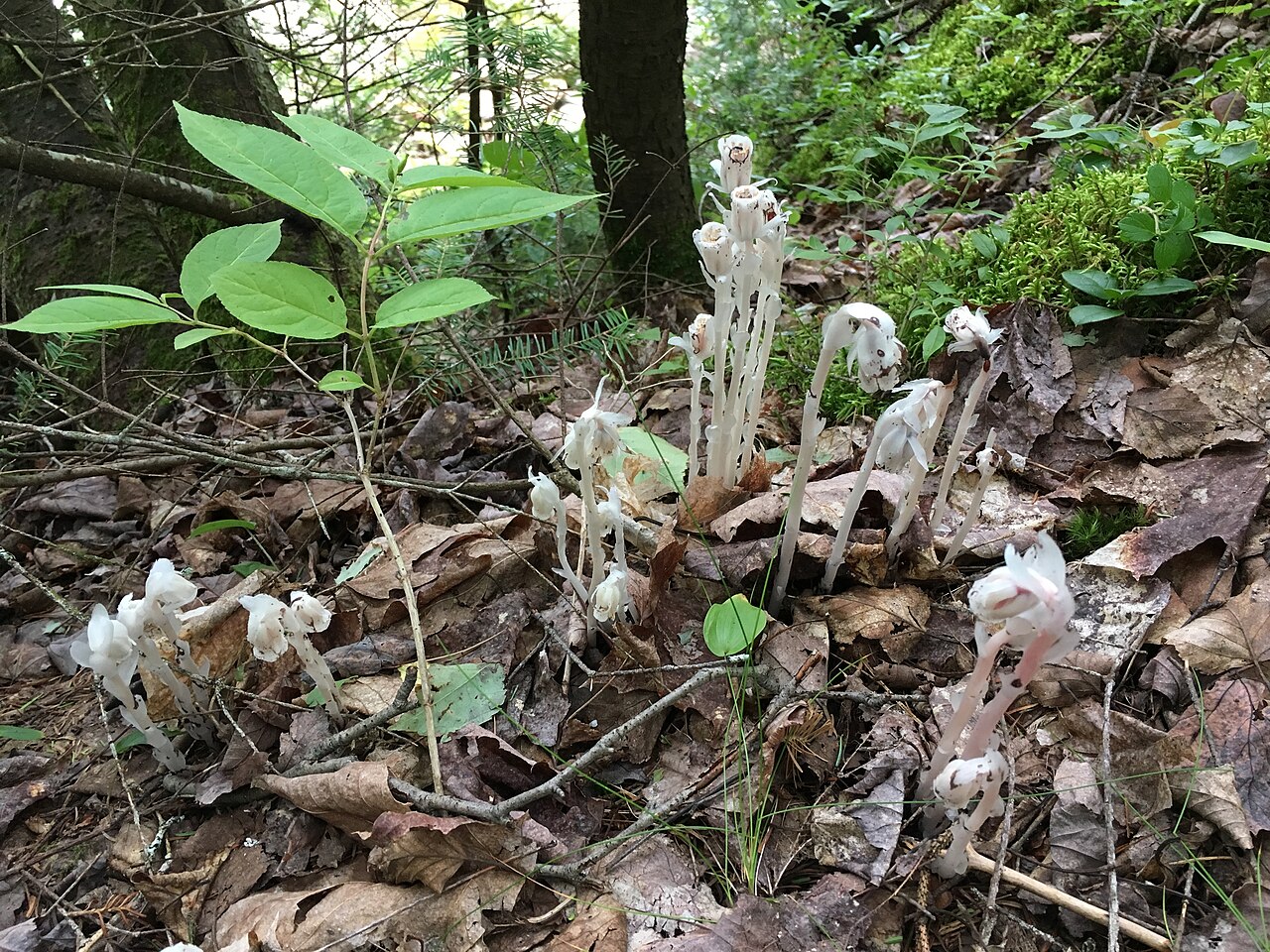
One of the most intriguing photographs in UNBC’s plant database shows ghost pipes at Forests for the World on September 23, 2005. They are already darkening. Photographer Allan Carson recorded the plants as their fruit developed and their stems dried, leaving upright forms that look very different from the bowed, pale flowers behind their common name.
That detail gives a familiar Prince George walk another dimension. The plant has been documented here, but its most recognisable appearance is only one part of its life. An autumn walker might overlook a dark stalk while searching for something white.
Sources: 1
A flower without green leaves
Ghost pipe is Monotropa uniflora, a member of the heather family. Cranberries and heathers are relatives. Beneath its unusual colour scheme, it has the equipment of a flowering plant: roots, reduced leaves, flowers and seeds.
What it lacks is chlorophyll, the green pigment involved in photosynthesis. A ghost pipe cannot build its supply of sugars in the ordinary leafy way. Its pale appearance is therefore a clue to how it lives, rather than a sign that a normal green plant has been bleached by shade.
Sources: 2
Following the carbon underground
The connection runs through fungi. Ghost pipes obtain carbon from mycorrhizal fungi associated with tree roots. The trees photosynthesise, the fungi receive carbon through their association with those trees, and the ghost pipe draws on the fungal partner. Scientists call this way of life mycoheterotrophy.
The buried part of the story matters as much as the flower. The plant is not simply eating the dead leaves beside its stem. Its connection reaches living organisms beyond the small patch that you can see. A photograph isolates one pale shoot; the biology refuses to stay inside that frame.
Particular fungi, particular connections
In a 2006 study, Sylvia Yang and Donald Pfister examined ghost-pipe roots from four sites in eastern Massachusetts. All 56 fungal samples belonged to the Russulaceae, the family containing Russula and Lactarius. The researchers found several fungal genetic types within that family, rather than one universal partner.
Those were Massachusetts plants, not a survey of Forests for the World. Yet the study reveals something useful about the relationship: the plant’s dependence is selective. Finding an ordinary mushroom nearby does not identify the fungus supporting a particular ghost pipe. The visible neighbours do not provide a reliable map of the connections underground.
Sources: 3
From bowed flower to upright fruit
E-Flora BC describes a perennial growing from a fleshy root mass, with stems typically 5 to 30 cm tall. The small leaves are scales. A single flower bends downward, while the fruiting stalk becomes upright; old stems can remain after the seeds have dispersed.
Look at that sequence as a set of changing shapes: a curved neck, a solitary flower, an erect fruiting stem. Learning the sequence makes the plant easier to recognise than memorising a single ideal photograph. It also explains why a blackened specimen can belong to the same species as a fresh white one.
Sources: 4
A different way to look at the trail
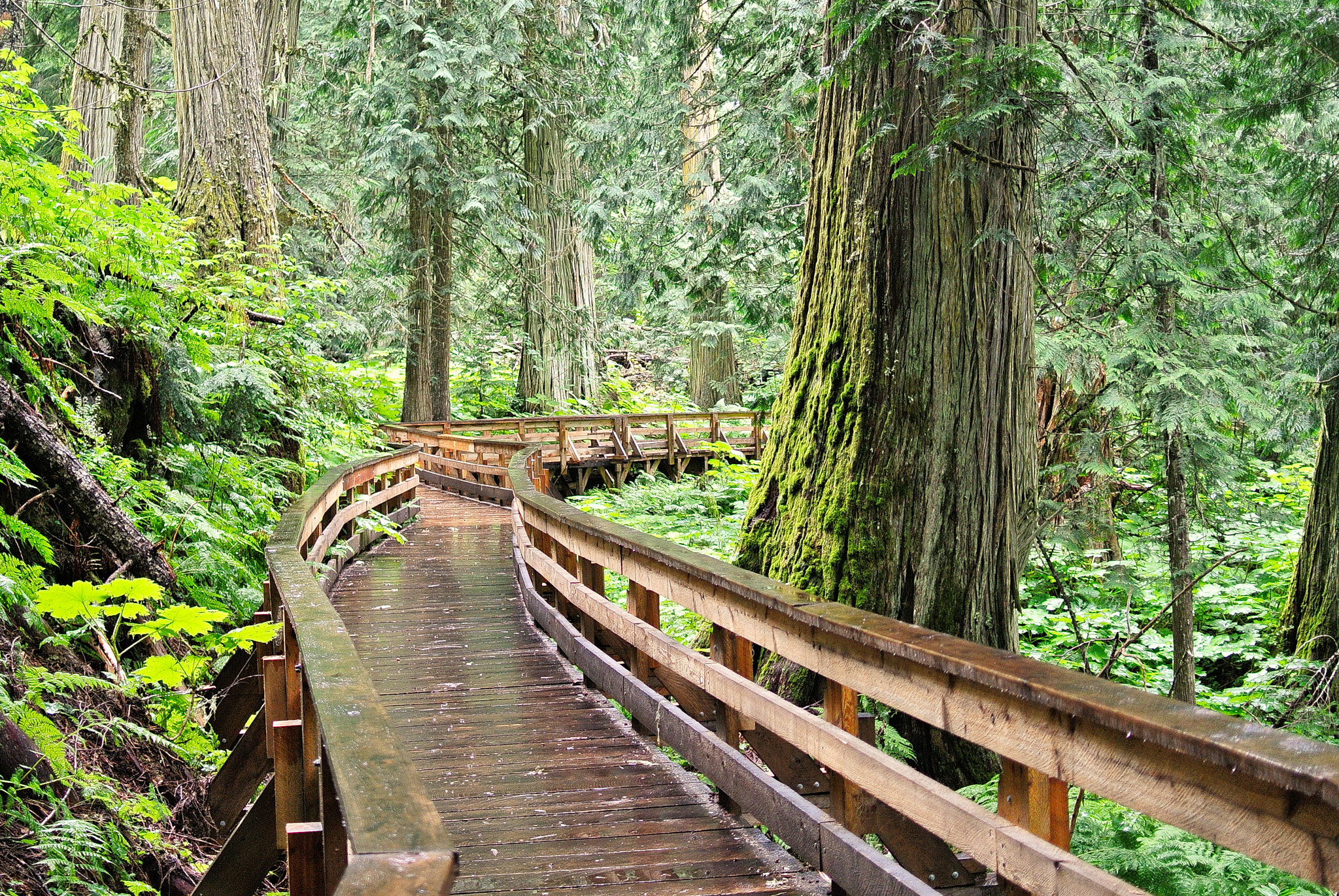
The Forests for the World guide makes a useful starting point for a walk that pays attention to small things. Keep the 2005 photograph in mind as a local record, rather than directions to a patch still flowering today. Leave plants rooted and photograph from the path where possible.
A flower can stand in the forest without making its own sugars, and a dark stalk can preserve the outline of a pale summer bloom. The small plants beside a familiar trail are connected to a world that continues below your feet. Knowing what you are looking at makes the woods more surprising.
Explore the places in this story
Forests for the World
The location of the documented 2005 plant photograph. This historic record is not a current sighting or a promise of flowering plants.
Sources and further reading
- UNBC plant database: Monotropa uniflora at Forests for the World (opens original source)University of Northern British Columbia · Checked
- Ghost plant: Monotropa uniflora (opens original source)Royal Botanic Gardens, Kew · Checked
- Monotropa uniflora plants of eastern Massachusetts form mycorrhizae with a diversity of russulacean fungi (opens original source)Sylvia Yang and Donald H. Pfister, Mycologia, 2006 · Checked
- Monotropa uniflora: E-Flora BC (opens original source)University of British Columbia · Checked