Fort Fraser’s Last Spike: The Other Railway Ceremony That Changed Northern BC
Near Fort Fraser in April 1914, the Grand Trunk Pacific’s rails met. The ceremony tells a northern railway story of ambition, work and complicated consequences.
Another last spike, another railway
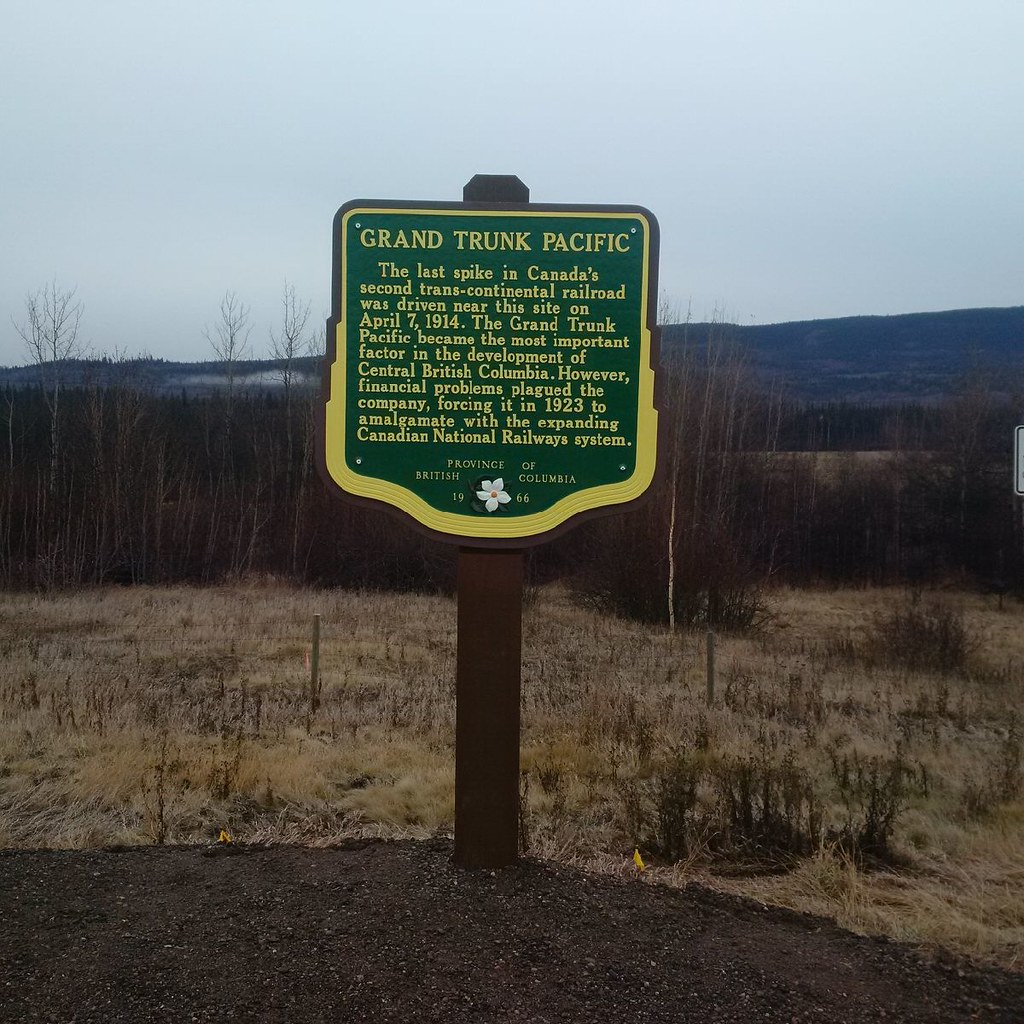
The date was 7 April 1914, and the place was near Fort Fraser. A photograph preserved in Canada’s railway collections shows officials gathered where the Grand Trunk Pacific’s tracks met. This was a different last-spike moment from the Canadian Pacific ceremony of 1885, and it belonged to a different vision of the country.
The new line connected communities and construction sites with Prince Rupert on the Pacific. Fort Fraser briefly became the meeting point of a project reaching far beyond the valley. Joining the rails represented years of work and the hope that new traffic would support the investment.
Read the announcement beside the advertisements
The Victoria Daily Times reported the connection in its 9 April edition. Its account named chief engineer B. B. Kelliher and described an engine crossing the newly connected line. It also distinguished that immediate joining from plans for a later celebration and the inauguration of regular service.
The same newspaper page promoted Fort Fraser as an industrial centre. Manufacturers were being offered inducements to locate there. Put those items together and the meaning of the ceremony becomes clearer: news of completion and advertising for a hoped-for future were appearing side by side. A railway could bring customers and investment, but it also encouraged promises about what a place might become. The last spike was both an engineering milestone and a powerful sales story.
Sources: 2
A completed line still needed a business
Library and Archives Canada records the line opening to traffic on 24 August 1914, months after the rails met near Fort Fraser. Its company history describes a new western enterprise without an established business network of its own. Under the wider transcontinental plan, the Dominion government built the eastern division while the company built the western division.
Increasing construction costs, competition and the outbreak of war strained the undertaking. In March 1919, the government placed the Grand Trunk Pacific system in receivership so trains could keep running. The physical route survived the financial failure of the company that built it. Driving a final spike had finished the track, but it had not finished the difficult work of paying for a railway.
Sources: 3
This was already a connected country
The railway entered the homeland of the Nadleh Whut’en. Their language and culture account describes Dakelh as people who travel by water and stresses the relationship between language, history and place. Lakes, rivers and existing routes already connected communities before railway companies drew a new line across the region.
That is an essential correction to the language of opening up an empty country. New transportation changed who could travel, how goods moved and which places attracted outside capital. It did not create the first human geography here. A visit to the Fort Fraser area is richer when the railway ceremony is understood within that continuing Indigenous landscape rather than used as its starting date.
Sources: 4
One hundred years later, still worth marking
A century later, the connection was still worth marking locally. Regional District of Bulkley-Nechako minutes record a CN centenary celebration at Fort Fraser in May 2014. By then, generations had lived and worked beside the route that the 1914 ceremony had joined.
Sources: 5
Make the landscape part of the story
Beaumont Provincial Park, on the east side of Fraser Lake, offers a public lakeshore stop with connections to the earlier Fort Fraser trading-post history. Northward’s Beaumont guide can help plan that visit. The park is separate from the railway’s last-spike location, and active railway property is not a visitor route.
The April 1914 newspaper sets the mood of the railway moment unusually well: a report of connected rails beside an advertisement selling Fort Fraser’s industrial future. The spike made a physical connection. What followed depended on traffic, markets and people deciding to make a life beside the line.
Explore the places in this story
Beaumont at Fraser Lake
A public lakeshore stop separate from the railway ceremony site.
Sources and further reading
- Grand Trunk Pacific last-spike ceremony photograph, STR01560 (opens original source)Ingenium, Canada’s Museums of Science and Innovation · Checked
- Victoria Daily Times, 9 April 1914 (opens original source)Victoria Daily Times, archival scan · Checked
- Grand Trunk Pacific Railway System fonds (opens original source)Library and Archives Canada · Checked
- Language and Culture (opens original source)Nadleh Whut’en · Checked
- Board minutes, 19 June 2014 (opens original source)Regional District of Bulkley-Nechako · Checked
- Beaumont Park (opens original source)BC Parks · Checked
- Grand Trunk Pacific last spike, 7 April 1914 (LAC C-046483) (opens original source)Library and Archives Canada photograph, catalogued by Wikimedia Commons · Checked