The Mansion That Disappeared: A Walk Through Ginter’s Meadow
A grand house once stood above the meadow. Its remaining stonework leads into the story of Ben Ginter, a construction fortune, an unlikely brewery and the landscape Prince George inherited.
An entrance without a house
A staircase is an invitation to imagine what used to be at the top. At Ginter’s Meadow, the remains of the old mansion interrupt an otherwise familiar Prince George outing: open ground, the wooded slope of Cranbrook Hill and paths heading toward the university. Stonework gives the vanished house a scale that its name alone cannot.
The name belonged to Ben Ginter, whose fortune came first from construction and whose reputation spread through beer. A mansion above the meadow made that success visible. Decades after the building disappeared, walkers still use his surname as shorthand for the place.
Stand back from the remains and look at the setting. The interesting question is how a private estate became an everyday public landscape, and how much of a man’s story can survive after the rooms that once displayed his success are gone.
The machinery came before the beer
Ginter moved to Prince George in 1949 after growing up in Manitoba and starting out as a labourer. His construction company worked on the Pacific Great Eastern Railway and later on the Alcan project at Kitimat. Heavy machinery and the expansion of British Columbia’s infrastructure formed the base of his business career.
Those beginnings make the brewery turn particularly memorable. In January 1962, his Tartan Brewing bought the bankrupt Caribou brewery’s plant and equipment at public auction for $150,000. The purchase took him into a very different competition, in which packaging, distribution and drinkers’ loyalties mattered alongside the ability to build things.
The brewery’s own historical account describes an operation gaining attention by the middle of the decade, but also an owner repeatedly at odds with competitors and provincial authorities. Ginter could finance a conspicuous house. Winning over every neighbour, publican or official proved a less straightforward undertaking.
An argument you could hold in your hand
One of Ginter’s most consequential choices was small enough to fit in a hand: the aluminium beer can. The Museum of Vancouver’s brewing exhibition identifies him as a challenger to the major breweries, whose successful use of cans helped force larger competitors to install canning lines of their own.
It is easy to overlook the novelty from the distance of a modern recycling bin. Packaging can change who buys a product, where they take it and what they expect the next brand to offer. Ginter’s contribution sits in that everyday history, as well as in the larger story of business rivalry.
His own face became part of the sales pitch through Uncle Ben’s branding. The brewery’s timeline dates Uncle Ben’s Malt Liquor to 1969. A person whose work had once been recognised through roads and machines could now be recognised on a bottle. Around Prince George, the name would eventually outlast both the campaign and the mansion.
The house above the meadow
Local reporting describes the mansion’s indoor pool, imposing entrance and fireplace as expressions of Ginter’s wealth. Surviving archival photographs offer a way to see the actual building rather than reconstruct it entirely from its ruins. Northern BC Archives holds material on the house, including photographs and records of the debate over its demolition.
That debate matters. The building did not simply vanish from local memory when it was taken down. People argued about what should happen to it, and photographs preserved rooms and exterior details that a present-day walk can no longer supply. The archival record gives the missing house an afterlife beyond the stories repeated beside its foundations.
From the path, the remaining entrance is enough to suggest the change. The gestures of arrival are still legible: an approach, steps, stonework. Their destination has disappeared. What once presented a successful owner to his guests now prompts strangers to stop during a walk.
A different kind of inheritance
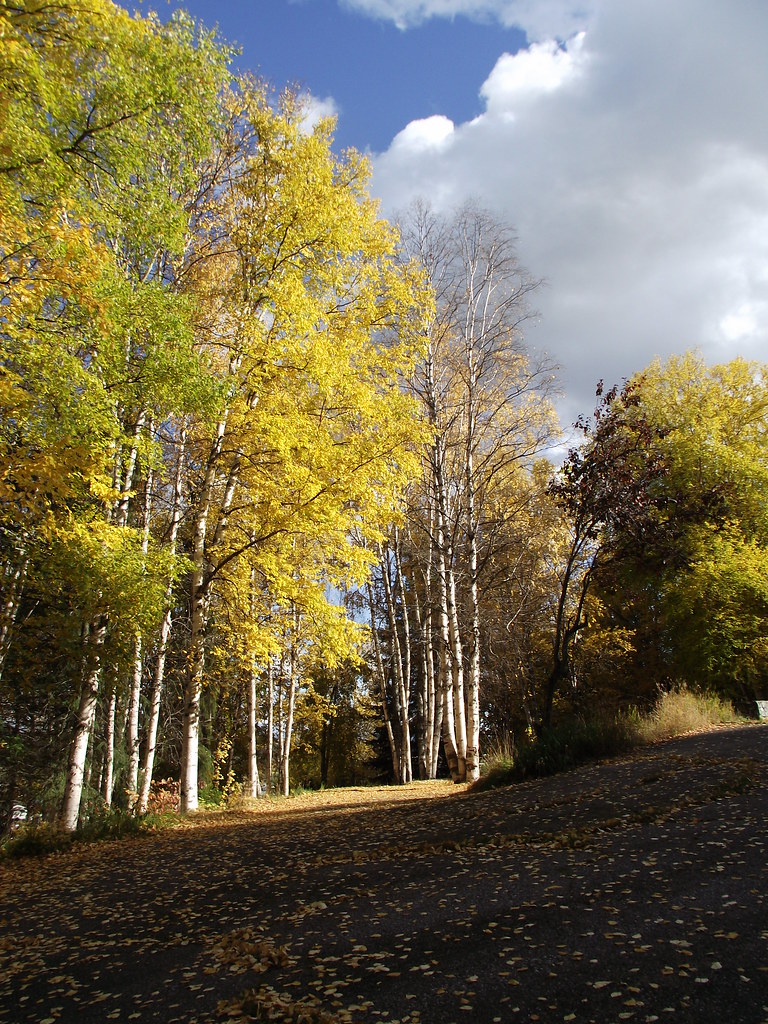
The meadow’s current life has its own appeal. Caledonia Ramblers describes a paved path with dirt branches and connections into the UNBC trail system. You can remain around the lower open ground or make the hill part of a longer outing. They are different experiences, and the view of the former estate changes as you climb.
Ginter’s is also a designated off-leash area, which helps explain its place in daily routines. Respect the posted boundary if your walk continues into neighbouring trails. Around the remains, stay on public paths and leave the masonry alone; an old entrance is a historical clue, not an invitation to test what still supports weight.
The mansion was built to make an impression. The meadow now leaves one in a quieter way: a regular place to walk, meet someone, watch the seasons and look toward the hill. The name has remained, while the meaning of a visit has changed.
Explore the places in this story
Ginter’s Meadow
The meadow is a public walking destination; do not climb or enter surviving ruins.
UNBC Connector Trail System
A separate, more demanding extension uphill.
Sources and further reading
- Now you know: The history of Ginter’s Mansion (opens original source)PrinceGeorgeNow · Checked
- Ginter, Benjamin George (opens original source)Encyclopedia of British Columbia / Harbour Publishing · Checked
- A brewing vision that aged slowly (opens original source)Pacific Western Brewing · Checked
- Home Brew exhibition guide (opens original source)Museum of Vancouver · Checked
- Our Story (opens original source)Pacific Western Brewing · Checked
- J. Kent Sedgwick fonds: Ben Ginter’s house (opens original source)Northern BC Archives, UNBC · Checked
- Ginter’s Field (opens original source)Caledonia Ramblers · Checked
- Pet-friendly parks (opens original source)City of Prince George · Checked