When the Trees Grow Crystals: Hoarfrost on a Prince George Winter Morning
On the right morning, bare twigs acquire a delicate new outline. The crystals growing on them tell a story about invisible water and a cooling night.
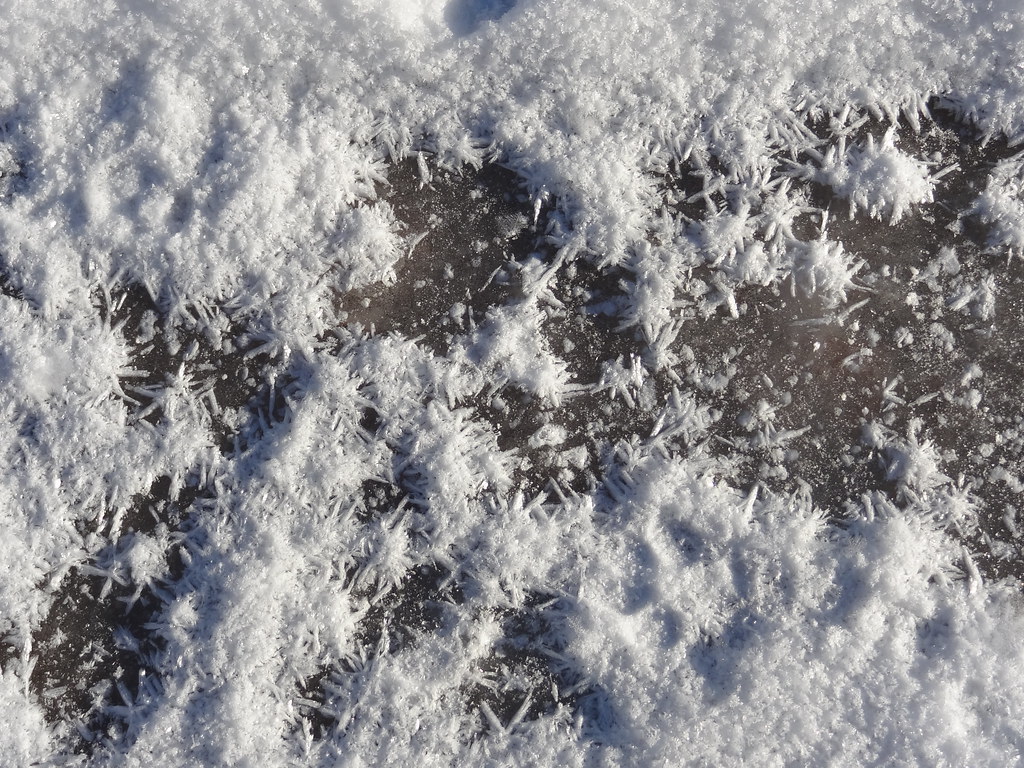
The branch has grown an outline
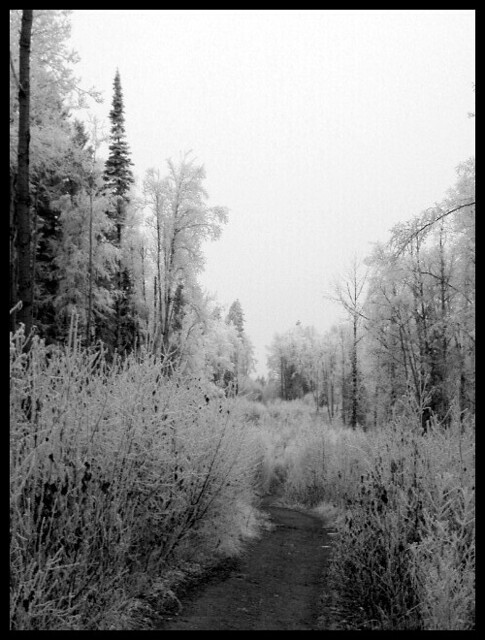
On a frosty morning, a bare twig can look much larger than it did the evening before. Its edges bristle with crystals, turning a plain length of wood into something delicate and intricate. The tree has acquired a second set of branches, made of ice.
Hoarfrost grows when water vapour deposits as ice on a sufficiently cold surface. It need not arrive as falling snow. The material can come from moisture already in the surrounding air, building directly on the twig, grass stem or other object.
That is part of its appeal on a Prince George winter walk. A familiar tree can hold a small display assembled overnight, without a snowfall to announce that anything has changed.
Sources: 1
What a clear night takes away
After sunset, the ground and exposed objects continue to lose energy as infrared radiation. Clouds and water vapour emit infrared energy too, returning some towards the surface. A clear sky changes that balance, allowing exposed surfaces to cool more effectively.
This is why the details of the night matter. The temperature reported for the air does not describe every twig, blade of grass and car roof. Surfaces exchange energy with their surroundings and can cool at different rates. The next morning’s pattern can therefore vary over a very short distance.
A frosted edge and a bare patch nearby may be parts of the same weather story. Shelter, exposure and the surfaces themselves help decide where the night leaves its visible trace.
Sources: 2
The shape is part of the story
Ice crystals grow in response to the conditions around them. Temperature and the supply of water vapour influence their developing forms. Physicist Kenneth Libbrecht’s work on snow crystals explores how those conditions can produce remarkably complicated structures from the same substance.
At the scale of a twig, that complexity is the attraction. What looks like a white coating from several steps away can resolve into distinct plates, needles or branching forms. The crystal is not a miniature sculpture that arrived finished. Its shape records growth.
It also rewards a slower kind of walk. A branch beside the path may offer more to notice than a distant viewpoint, especially when the light catches the edges of individual crystals.
Sources: 3
Not every white tree wears hoarfrost
Rime can also turn branches white, but it follows a different route. Tiny supercooled droplets in fog freeze when they strike a cold object. Wind can build the deposit on exposed surfaces, giving it a rough, opaque appearance.
Glaze is different again: a clearer, smoother coating produced when liquid precipitation freezes on contact. Fallen snow adds another possible layer. From a distance, these processes can give a tree a similar winter outline, although the material reached it in different ways.
Look closely, and consider the weather that came before. A photograph of a white branch alone may not settle the name. The distinction makes the scene more interesting: winter can clothe the same tree using vapour, fog droplets, rain or snow.
Sources: 4
Crystals can grow on snow too
The snow surface can grow its own feathery crystals during suitable cold, clear, relatively calm conditions. This is surface hoar. A glittering layer can look almost too fragile to last, yet it can become important after the next snowfall hides it.
Avalanche Canada explains that buried surface hoar can form a persistent weak layer, slow to bond with the surrounding snow. Its beauty at the surface and its later role inside the snowpack belong to the same process.
Admiring crystals beside a city path is one thing; using them to judge a mountain slope requires far more information. A sparkling surface does not provide a complete account of the snow beneath it.
Sources: 5
A small reason to go outside
Cottonwood Island’s trees and the woods at Forests for the World give a winter walk plenty of branches to notice. Neither needs a promised frost display to justify the outing. When the weather does provide one, the familiar route becomes a chance to attend to something usually too small to feature on a map.
Leave the crystals on the branch. Move around it from the path, letting a different background or angle of light reveal the form. The tree will still be there on the next walk. Its temporary outline may have become something else entirely.
Sources: 6
Explore the places in this story
Cottonwood Island Nature Park
Observe ice on accessible trail-side branches; frost is weather-dependent, not guaranteed.
Forests for the World
A forest setting for winter observation from established land trails.
Sources and further reading
- National Weather Service glossary: hoar frost (opens original source)NOAA National Weather Service · Checked
- Clouds, Water Vapor, and Temperature (opens original source)Penn State Department of Meteorology and Atmospheric Science · Checked
- Snow Crystals (opens original source)Kenneth G. Libbrecht, Caltech, 2019, revised 2021 · Checked
- What is frost and ice? (opens original source)Met Office · Checked
- How Do Avalanches Form? (opens original source)Avalanche Canada · Checked
- Trails (opens original source)City of Prince George · Checked