Why Is That Mountain Lake Blue? Reading the Colours of Northern BC’s Lakes
Turquoise, clear blue, green or almost black: the colour of a northern BC lake tells a story about light, water and what its watershed carries.
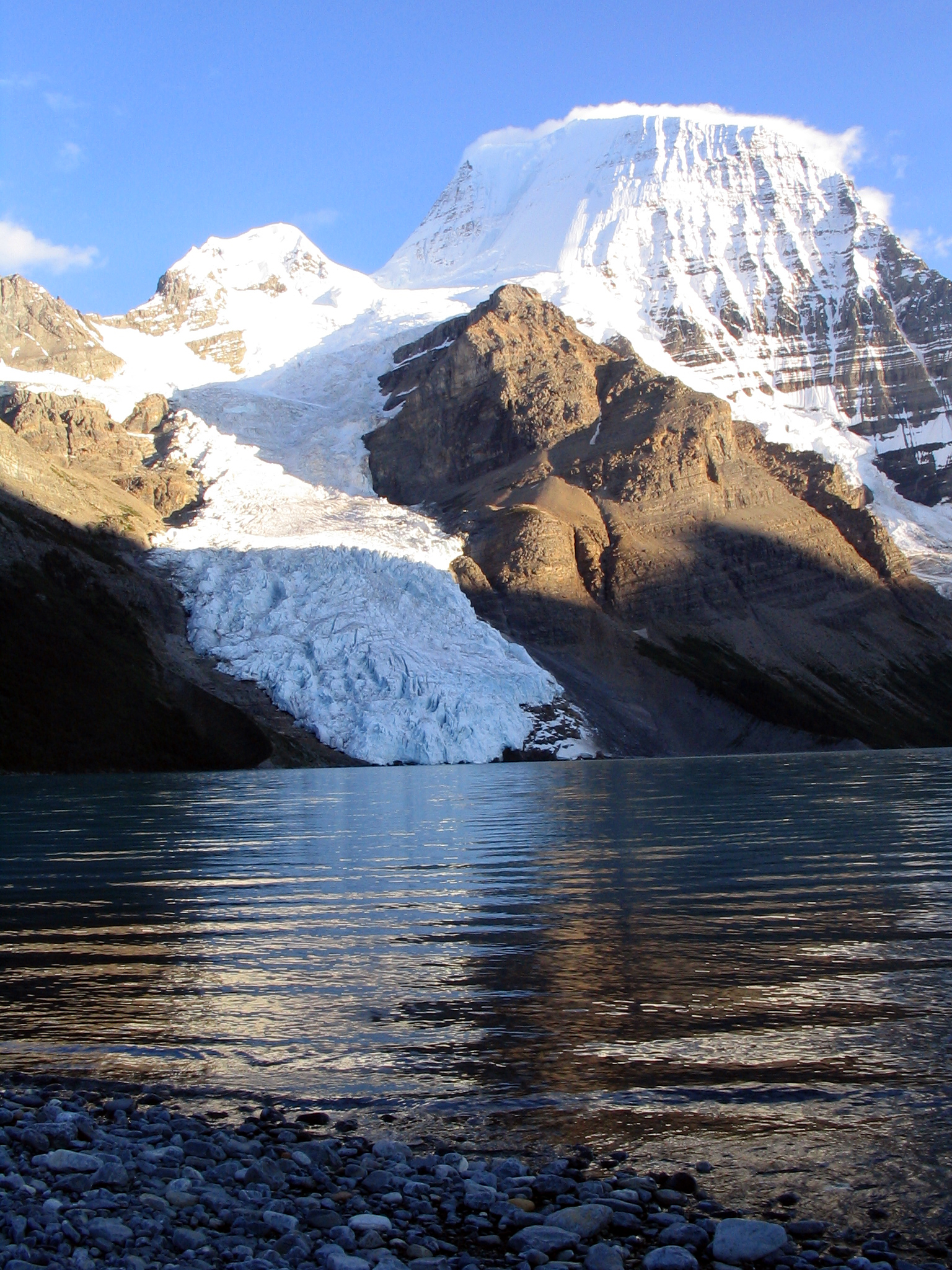
The water can steal the view
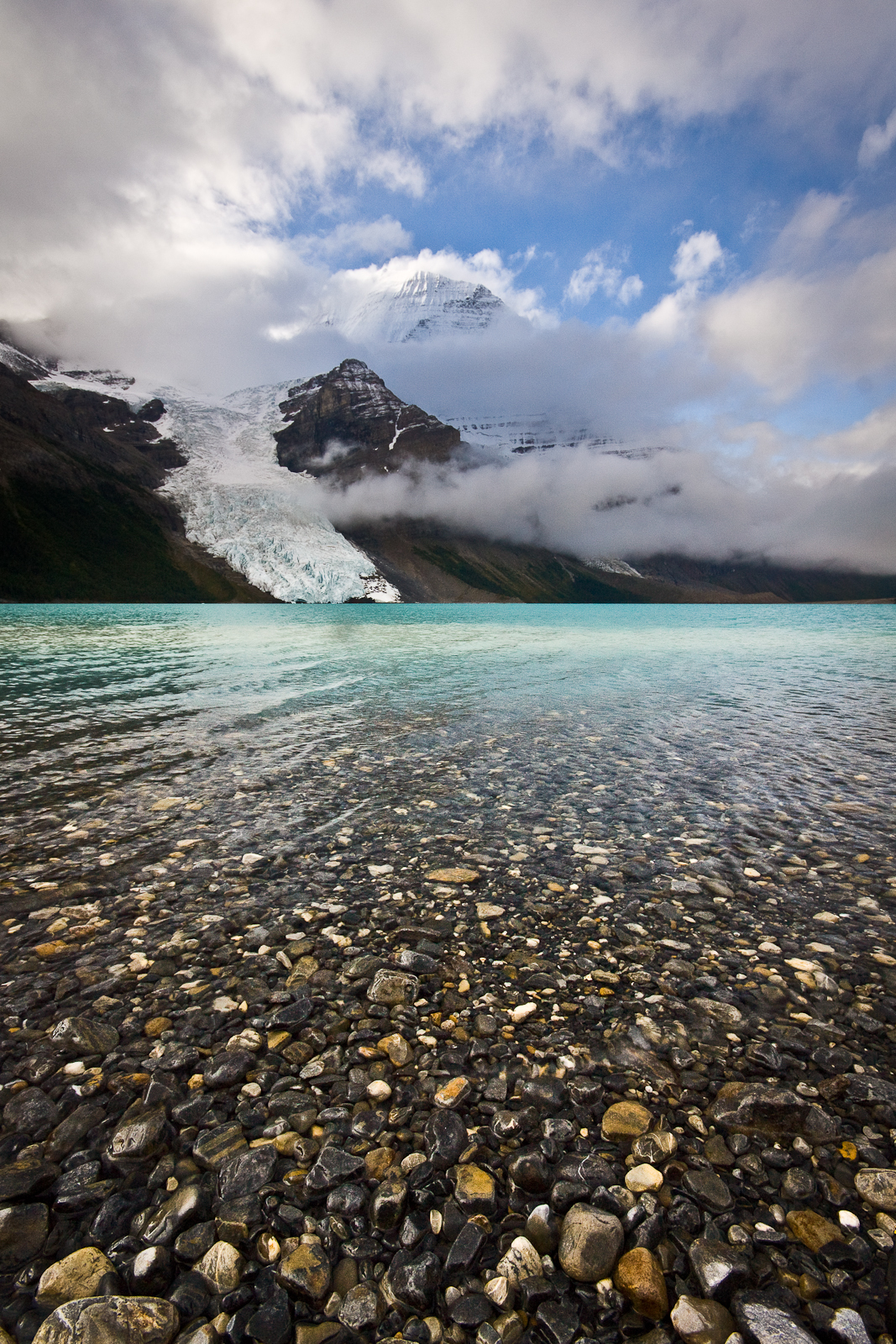
At Mount Robson, the mountain is not the only thing that can hold your attention. Kinney Lake and Berg Lake give the eye somewhere else to settle. The question in front of a striking mountain-lake photograph is often the same: can water really be that colour?
It can, but the answer involves more than a reflection of blue sky. Light passes into the water, encounters what it carries and returns to your eye. Change the depth, the sediment or the light, and the scene changes with them.
Water has a colour of its own
Pure water has a faint blue colour, most noticeable when light travels through enough of it. Water molecules absorb the red end of visible light more strongly than the blue. A drinking glass is too shallow to make the effect obvious; deeper water offers a much longer path.
The sky can contribute a reflection, but the water also changes the light travelling through it. A blue lake need not owe its colour to a glacier.
Sources: 1
When a glacier grinds the rock
Glaciers can add an entirely different ingredient. As ice moves over its bed, rock fragments carried within it grind against other rock, producing extremely fine sediment. The finest material is often called glacial flour. Meltwater can carry it into streams and lakes, where it remains suspended long enough to affect the way light scatters.
That helps explain the milky blue-green appearance associated with many glacier-fed lakes. The effect depends on the amount and properties of the sediment and on the light reaching it. More glacial material does not necessarily mean a prettier or bluer lake. Water very heavily loaded with sediment may look cloudy grey instead. The watershed and the inflowing streams matter as much as the final photograph.
Sources: 2
Green and brown have other stories
Algae and other microscopic organisms can influence colour. Dissolved organic compounds from soils and vegetation can darken water by absorbing light. Unlike a suspended particle, dissolved colour will not simply settle to the bottom. Think of the difference between muddy water and a cup of tea.
These ingredients combine with the water’s own optical properties. Green is not a dependable sign of glacial flour, just as brown is not a diagnosis of pollution.
Sources: 3
Follow the water into the lake
Lakes in glaciated landscapes range from opaque turquoise to clear water. The presence of mountains once shaped by ice does not mean that a lake receives a substantial supply of fresh glacial sediment today.
A useful part of a lake view is the basin above it. Look for an inlet, a wooded slope or ice higher in the mountains. The landscape gives the colour a setting: places where water gathers, material it can pick up, and a route into the lake.
Sources: 4
A changing mixture
The colour is an event as well as a property. Sun and cloud change the light; ripples change the surface. A lake can look different while you stand beside it.
That variation is part of the appeal. The photograph holds one moment, while the water keeps receiving whatever its watershed sends. Beneath the mountain view, there is another landscape in motion.
Explore the places in this story
Kinney Lake day hike
A mountain-lake example in the Robson watershed; colour varies with conditions.
Berg Lake Trail and Robson Pass
The full mountain journey has separate access and reservation requirements.
Ferguson Lake Nature Reserve
A contrasting local lake setting, without an unsupported chemical explanation for its colour.
Sources and further reading
- Water Color (opens original source)US Geological Survey · Checked
- Glacial Till and Glacial Flour (opens original source)US National Park Service · Checked
- Introduction to Aquatic Remote Sensing (opens original source)US Geological Survey · Checked
- Lakes and Ponds (opens original source)US National Park Service, Glacier National Park · Checked
- Mount Robson Park (opens original source)BC Parks · Checked