Where the Plowed Road Ends: The Hidden First Part of a Winter Hike
Learn how winter road access changes a hike near Prince George, from Hungary Creek cabin approaches to the difference between a road and a trailhead.
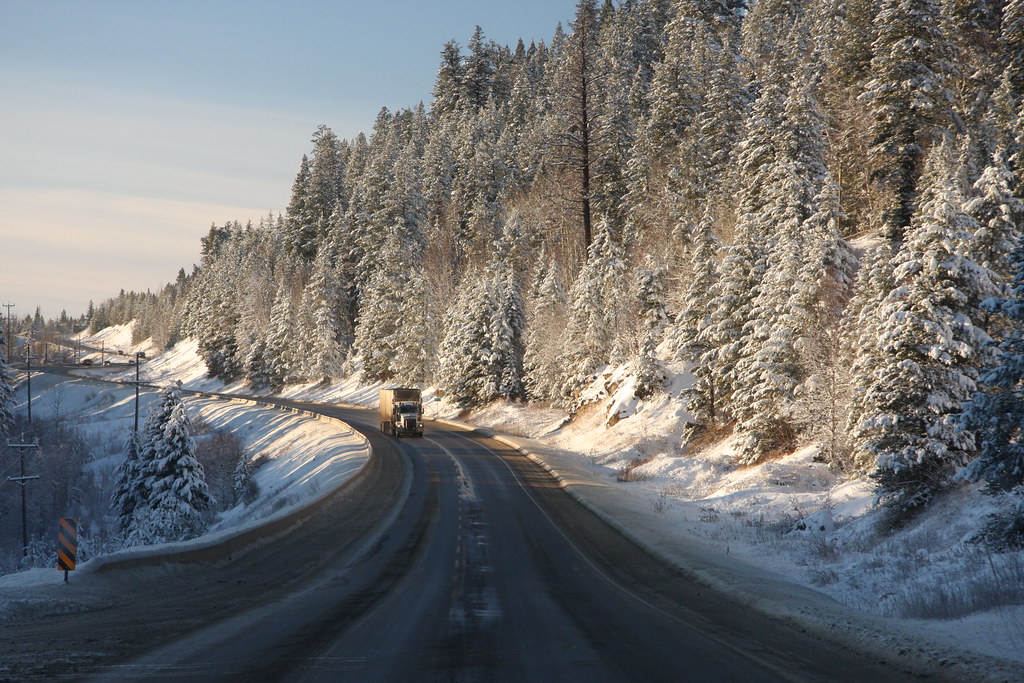
The hike can begin before the trail
The most consequential line in a winter trail description may be the one about the road. A route that starts at a summer parking lot can begin much farther away once plowing stops. Before you reach the familiar sign, you may already have done a substantial part of the day’s travel.
Around Prince George, this is particularly important for backcountry cabin plans. The cabin name stays the same on the booking, and the trail stays the same on the map, while the journey from the vehicle changes. Winter planning starts by finding that vehicle’s realistic stopping point.
Sources: 1
Why a mapped road is not a promise
British Columbia’s resource roads serve forestry and other industrial activity as well as communities and recreation. They sit outside the provincial highway system, and their maintenance varies. Some roads are maintained chiefly to protect environmental values; some mapped roads have no active maintenance at all.
That explains why a road line and a driving app cannot answer the winter access question. They describe a connection through the landscape, not a commitment to clear it for a weekend hike. The province’s maintenance guidance treats snow removal, ice management and traction work as operational tasks. Those tasks need someone responsible for doing them.
One notice, several different situations
PGBRS’s October 6, 2026 update says Hungary Creek Forest Service Road will not be plowed for winter 2026/27, while plowing on Pass Lake FSR remained uncertain. It describes the Longworth trailhead as on a plowed public road with limited parking, and the Penny approach as on a public road where delays should be expected.
Those statements should remain attached to their date. They also answer different questions. A plowed road may still offer little parking. A public road may be cleared on a schedule that does not match your arrival. An uncertain road is not an invitation to assume last winter’s arrangement will repeat.
Sources: 3
Count from the vehicle
Write the journey in three parts: road approach on foot or skis, the trail itself, and the return. If a hypothetical outing adds 4 km of road before the trail, that adds 8 km to an out-and-back day. That is arithmetic, not a distance estimate for Hungary Creek.
Time needs its own calculation. Deep snow, trail breaking, a heavier pack and changes in route finding can make a kilometre of winter travel very different from a summer kilometre. Choose a turnaround point using the slowest realistic progress for the group, with room for delays.
Put the actual vehicle location and approach in the trip plan left with your contact. Someone searching for a summer trailhead should not have to guess that your day began at a different junction.
Sources: 4
Parking is part of access
A cleared patch is not automatically a recreation parking space. Forest-road guidance emphasises keeping routes clear for industrial users. Leave room for vehicles and snow-clearing equipment to work, and do not block a gate, a junction or the space needed to turn.
Check current resource-road notices through the appropriate Natural Resource District, then use the responsible road or trail operator for site-specific information. Conditions can change after a report is posted. A track in the snow says only that a vehicle went that way; it does not establish your vehicle’s clearance, traction or ability to turn around.
Choose the whole outing
Sometimes the extra approach becomes the main event, and a lower destination is the right choice. Sometimes it makes the intended hike too long for the available day. Either answer is useful when reached before the car is parked.
A winter route begins where you can actually start travelling, not where the summer guide begins counting. Once that is clear, the decision becomes much simpler: choose the entire journey you want to make.
Sources: 6
Explore the places in this story
Eight Mile Cabin
The winter road approach can dominate an otherwise brief summer trail.
Raven Lake cabin
Summer parking is not automatically the winter starting point.
Longworth Lookout
Road plowing does not remove avalanche and exposure hazards on the mountain route.
Sources and further reading
- Resource Roads (opens original source)Province of British Columbia · Checked
- SOP09: Snow Plowing and Winter Maintenance (opens original source)BC Ministry of Forests · Checked
- PGBRS current notices (opens original source)Prince George Backcountry Recreation Society · Checked
- Trip Planning: Where Every Adventure Starts and Ends (opens original source)AdventureSmart · Checked
- Forest Roads: Guide for Safe Travel (opens original source)Province of British Columbia and BC Forest Safety Council · Checked
- Resource Road Safety Information (opens original source)Province of British Columbia · Checked