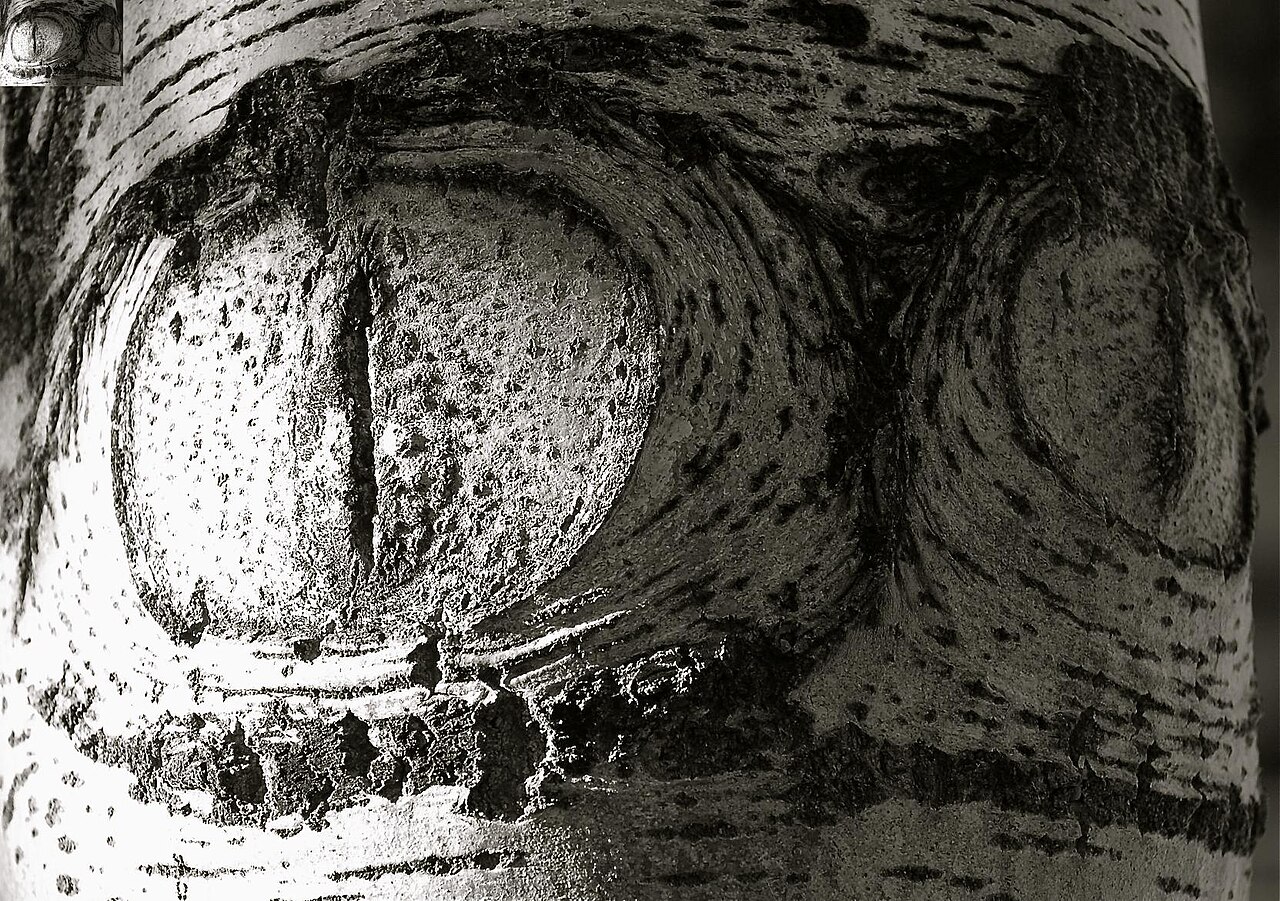
Natural eye-like patterns in white-poplar bark at Parque das Nações, Lisbon, photographed in 2008. This Portuguese example illustrates pareidolia; it is not a Prince George tree or a carved face.Pedro Ribeiro Simões from Lisboa, Portugal · CC BY 2.0Photo details
Retain creator credit, source and licence. Display full frame.
Photographed: 2008-07-28
Original title: The tree's eyes (2710810851).jpg
Two knots and a split in the bark can become a face before you have time to decide what you are looking at. The strange part is how much of your brain believes the first impression.
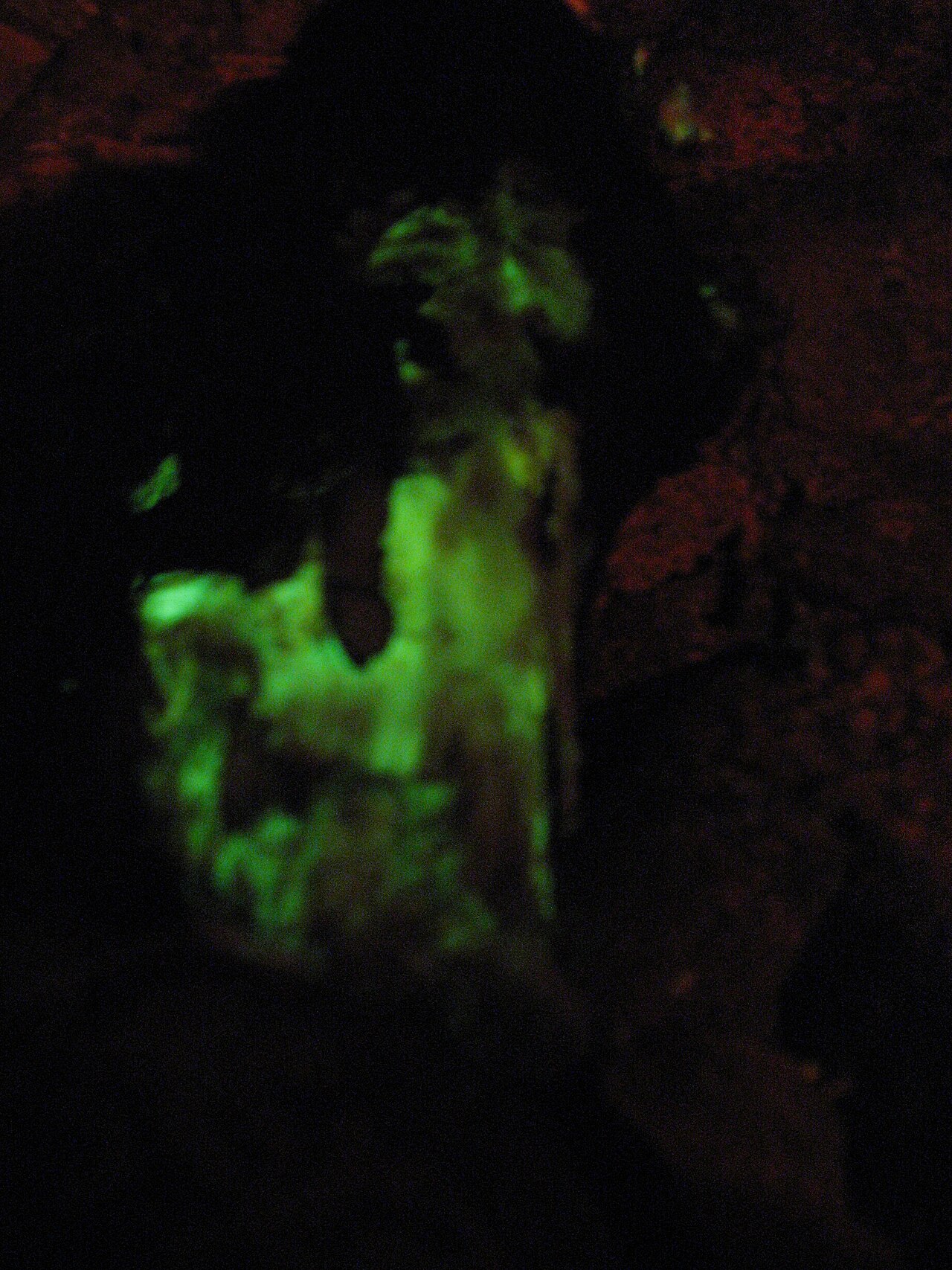
Foxfire photographed by Bruce McAdam in August 2006: luminous fungi on rotting tree bark. The location and fungal species are not established in the source record. This is a general example of the phenomenon, not a Prince George sighting.Bruce McAdam · CC BY-SA 2.0Photo details
Retain credit, source and licence. Any derivative must use compatible share-alike terms. Do not label as photographed in Prince George or infer a species.
Photographed: 2006-08-05
Original title: Foxfire: bioluminescent fungi on rotting tree bark
Some fungi can turn decaying wood into a source of light. The chemistry is real, but the reason for the glow is a more complicated mystery.
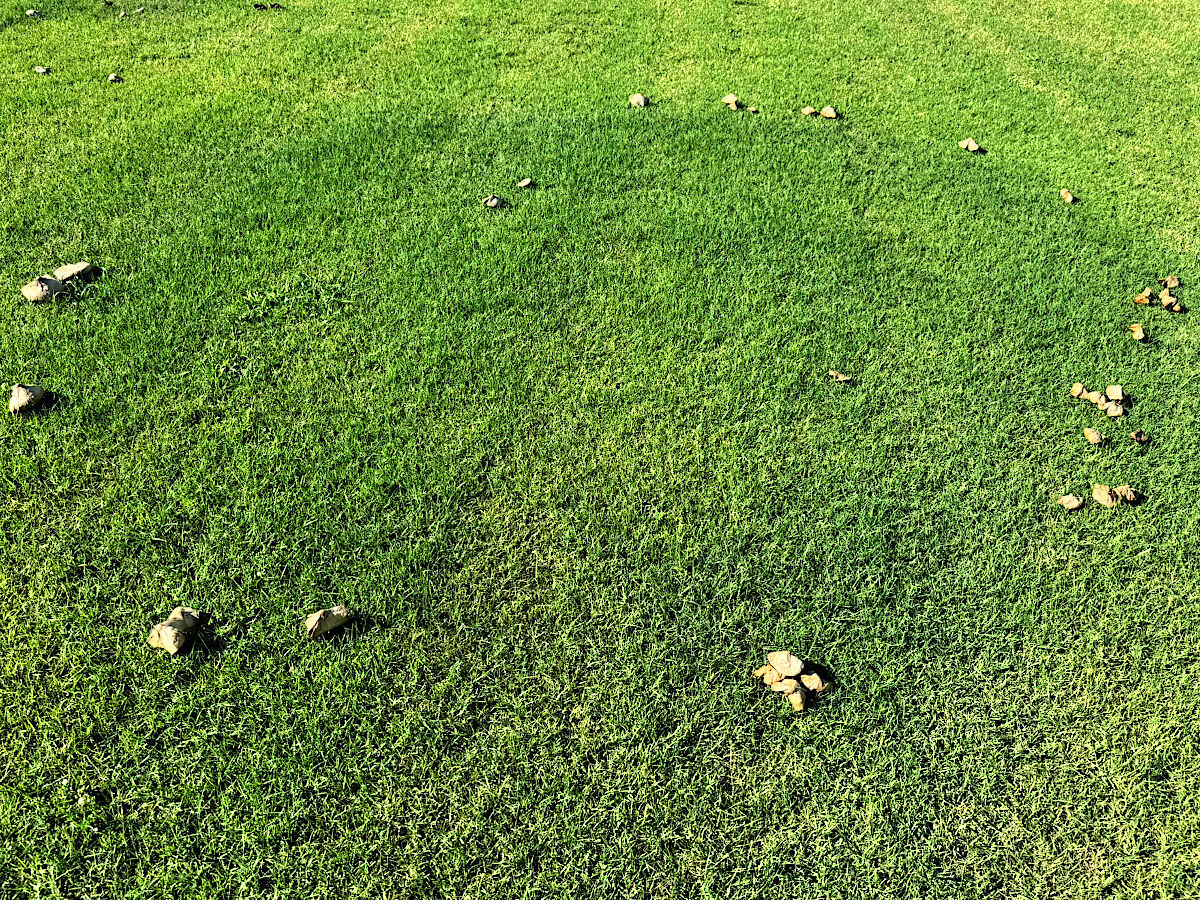
A ring of Chlorophyllum molybdites mushrooms in a lawn in Mesa, Arizona, September 2025. It illustrates the ring form; it is not a Prince George observation or an edible-mushroom identification.peterwchen · CC BY 4.0Photo details
Retain attribution and licence. Any adaptation must follow the source licence.
Photographed: 2025-09-09
Original title: Chlorophyllum molybdites-fairy ring.jpg
A circle of mushrooms looks arranged, almost deliberate. Under the grass, a slow-moving organism has been drawing the pattern for far longer than the mushrooms have been visible.