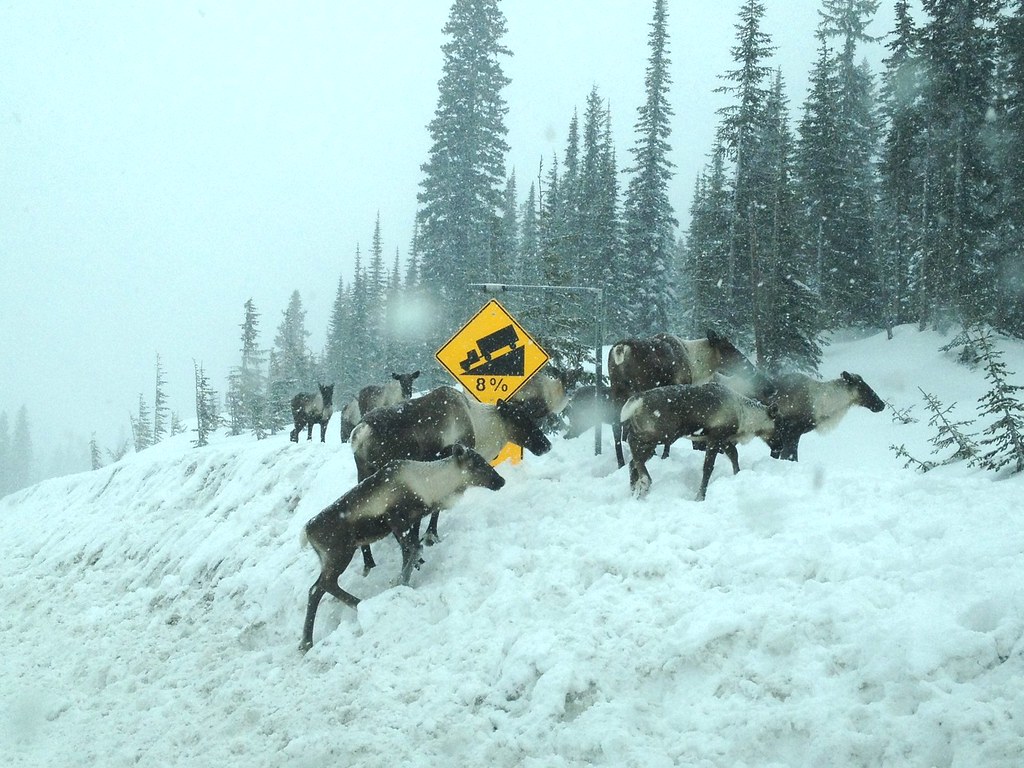
Mountain caribou beside a snowy highway in the Kootenays, 20 March 2013. This British Columbia example illustrates the animals and winter habitat discussed; it is not a Prince George sighting.B.C. Ministry of Transportation and Transit · CC BY-NC-ND 2.0 · Noncommercial onlyPhoto details
Noncommercial use only. No derivatives. Display the complete unaltered image. Preserve photographer attribution and licence.
Photographed: 2013-03-20
Original title: Mountain caribou on first day of spring
For deep-snow mountain caribou, winter can lift the forest floor towards food hanging in the trees. Snow, lichens and old forest have to work together.
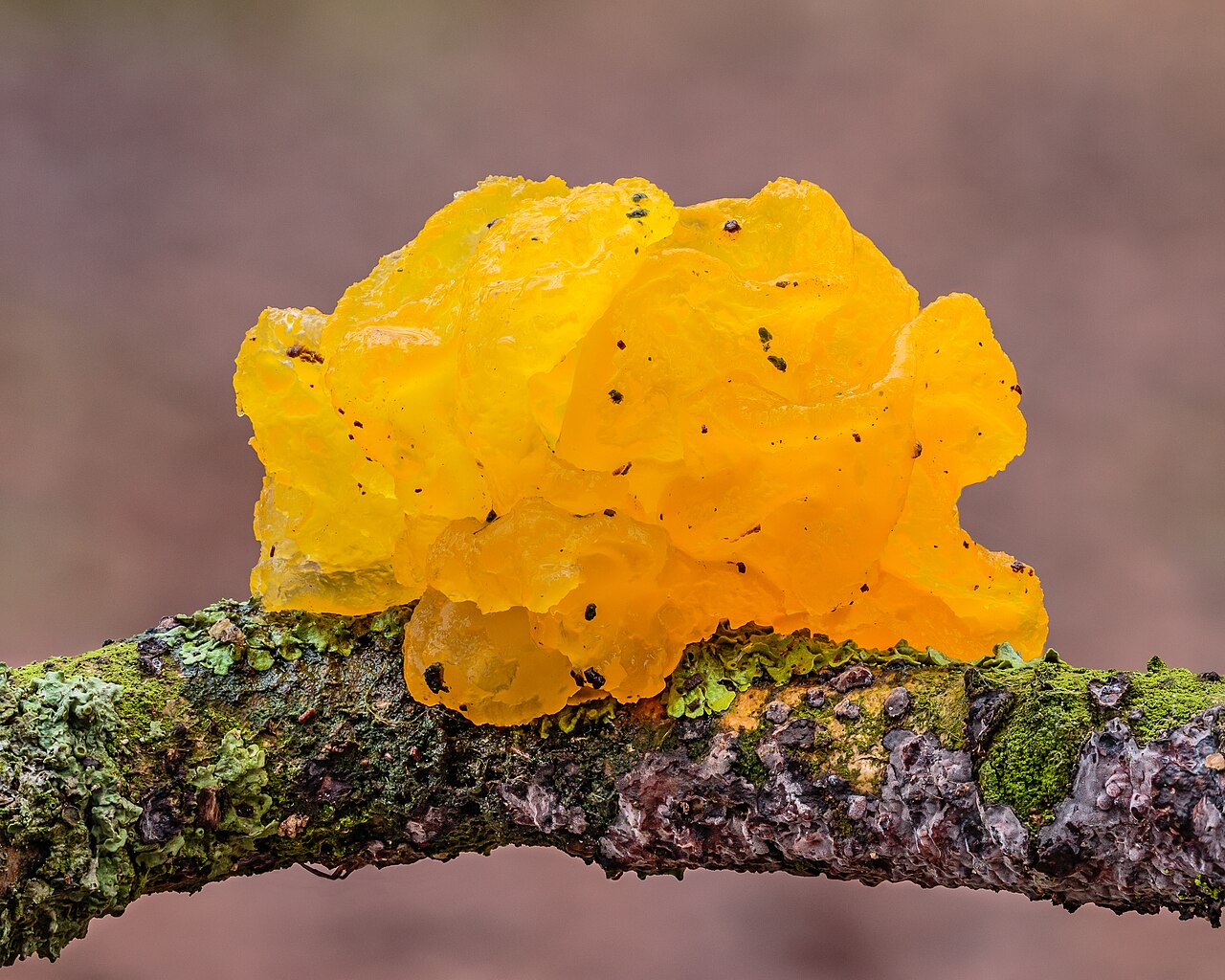
Witch’s butter (Tremella mesenterica) on a dead branch, January 2021. The photographer combined 21 exposures in a focus stack; the location is not established.Agnes Monkelbaan · CC BY-SA 4.0Photo details
Retain attribution and licence. Any adaptation must follow the source licence.
Photographed: 2021-01-15
Original title: Gele trilzwam (Tremella mesenterica) op dode tak van een eik 15-01-2021. (actm.) 02.jpg
A yellow jelly fungus can reveal a second fungus, a microscopic encounter and the reason a fallen branch deserves a closer look.
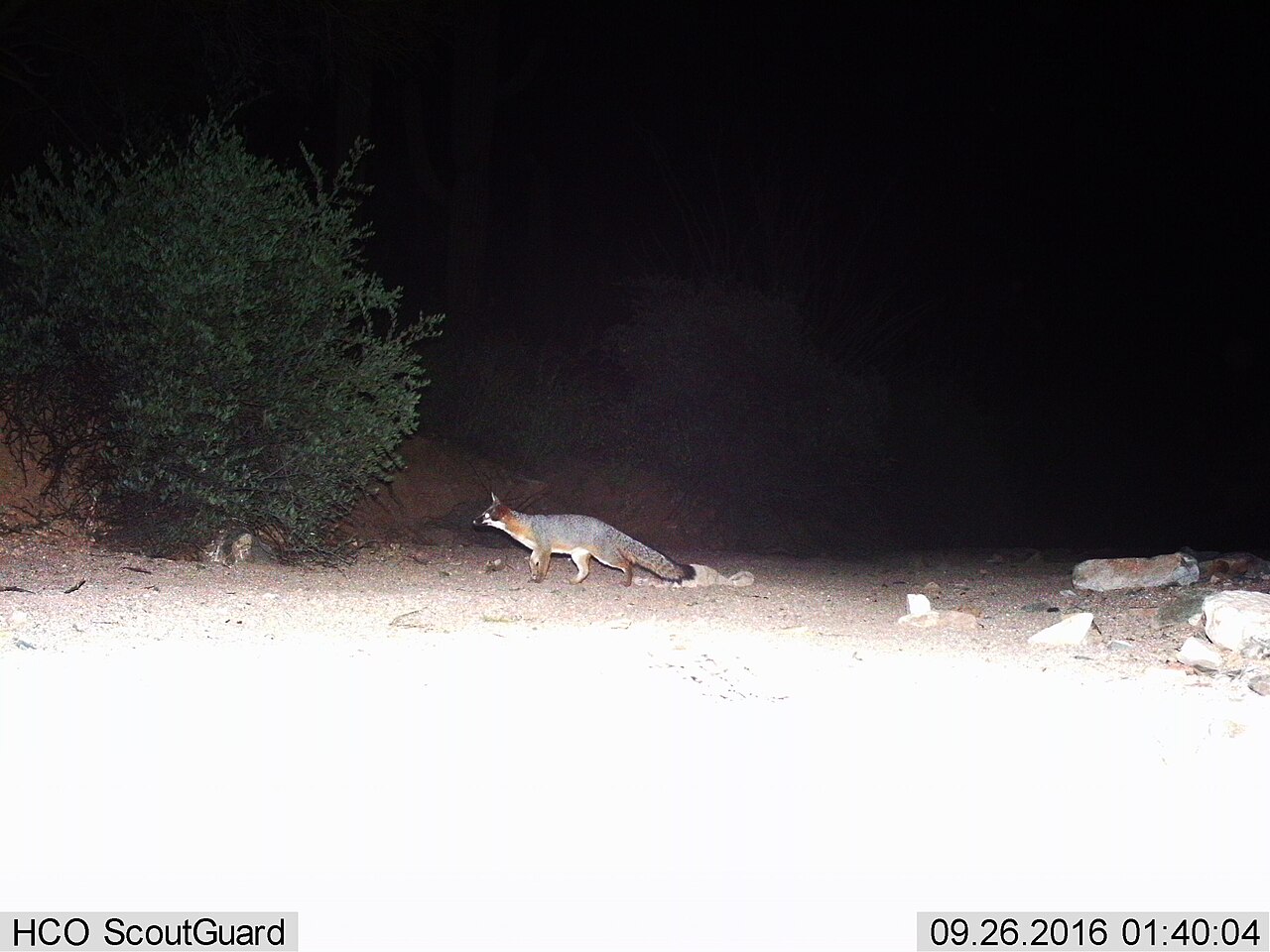
A gray fox recorded by a Saguaro National Park trail camera in Arizona, September 2016. Its eye reflects the camera illumination. This is an example of eyeshine, not a Prince George wildlife record.SaguaroNPS · Public domain (U.S. government work)Photo details
Retain source credit and licence. This Arizona gray fox demonstrates eyeshine generally; do not present as Prince George wildlife or infer species identity from eyeshine colour.
Photographed: 2016-09-26
Original title: Gray fox, Urocyon cinereoargenteus (30727174932).jpg
Two bright points can turn a dark wood into a mystery. The explanation begins with your own light coming back.